

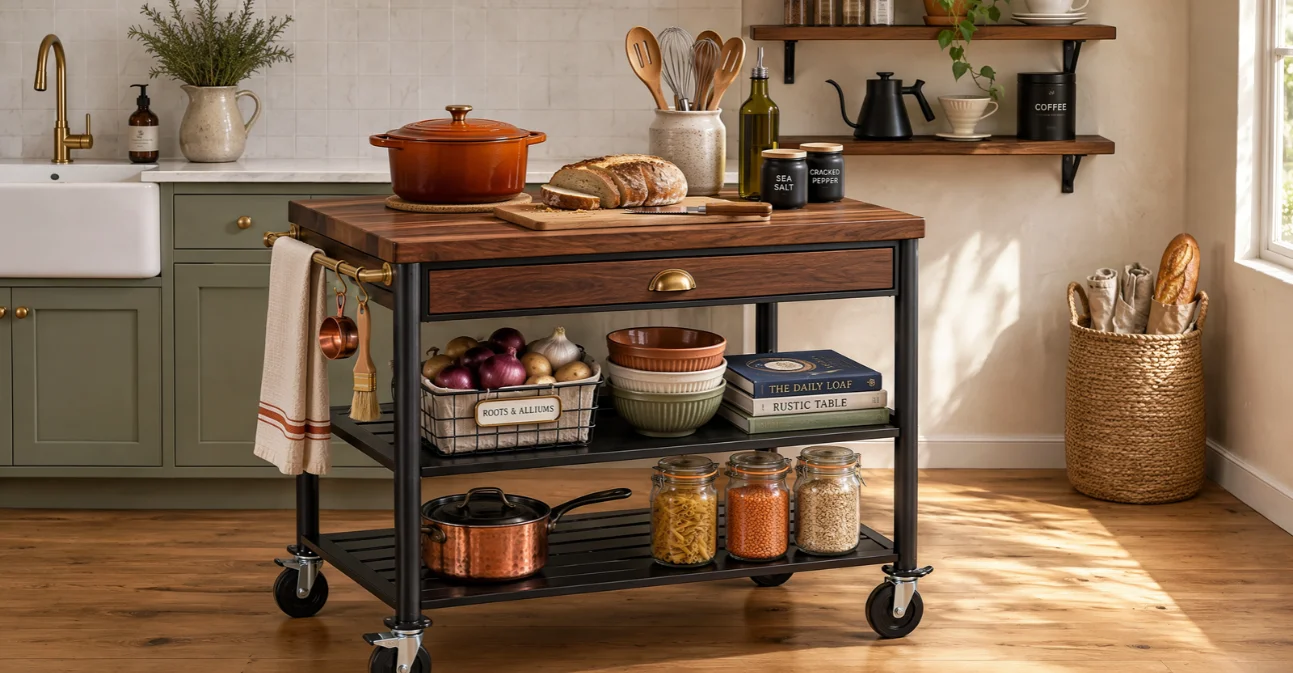
A kitchen trolley can add useful storage and preparation space without changing your fitted kitchen. The right model should fit your floor space, storage needs, and daily routine. Good castors also make it easy to move when you need more room.
For smaller UK kitchens, compact carts often work better than permanent islands. Larger units can provide drawers, cupboards, shelving, and an extra worktop. The key is choosing the right footprint before comparing colours or finishes.
Quick answer: Choose a trolley by measuring its parked space and movement route first. Then compare worktop size, storage layout, materials, castor quality, and brakes. Compact multi-tier carts suit storage, while larger mobile islands work better for food preparation and concealed storage.
Kitchen Storage Options at a Glance
| Type | Best for | Typical storage | Main advantage | Main drawback |
|---|---|---|---|---|
| Slim storage cart | Narrow kitchens and unused gaps | Open tiers or baskets | Small footprint | Limited work surface |
| Three-tier cart | Everyday ingredients and utensils | Open shelves | Easy access | Contents remain visible |
| Wooden mobile unit | Traditional or modern kitchens | Shelves and drawers | Warmer furniture-style look | Usually heavier |
| Metal utility cart | Busy households | Open tiers | Easy to wipe clean | More functional appearance |
| Mobile kitchen island | Extra preparation space | Drawers, shelves and cupboards | Larger usable worktop | Needs more floor space |
| Drop-leaf island | Flexible work areas | Mixed storage | Worktop expands when needed | Requires clearance to open |
Key Takeaways
- Measure width, depth, height, and turning space before buying.
- Choose storage around what you plan to keep on the unit.
- Braked castors help prevent unwanted movement during use.
- Open shelves favour quick access, while cupboards hide visual clutter.
- A larger mobile island suits preparation better than a narrow storage cart.
- Renters can gain flexible storage without changing fitted cabinetry.
How to Choose a Kitchen Trolley That Fits Your Space
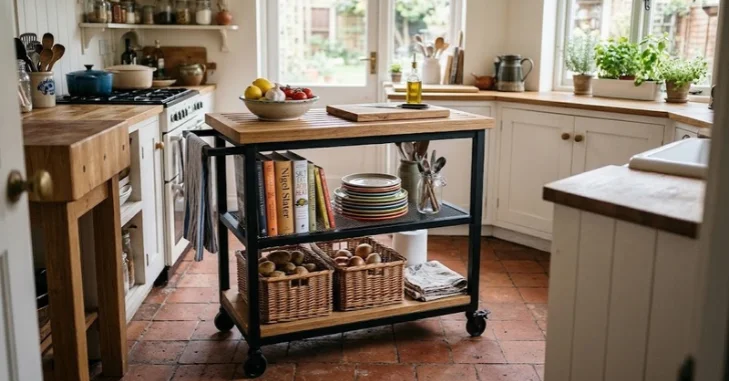
Kitchen Trolley where the unit will normally stand. Record the maximum width, depth, and height you can accommodate. Leave enough room for nearby cupboards, appliances, and doors to open properly.
You should also measure the route the unit may travel. Check doorways, narrow passages, corners, and projecting handles. A cart that fits its parking place can still become awkward if it cannot move freely.
Think about how much circulation space you need while cooking. A wider unit may provide more worktop, but it can make a compact room feel crowded. In small kitchens, a narrower design often gives better everyday flexibility.
If floor space is already limited, wall storage may solve part of the problem. Typify’s guide to kitchen shelves explains ways to use vertical space without adding another large floor-standing unit.
Choose the Right Type for the Job
A simple storage cart works well for jars, vegetables, cookware, or small appliances. Open tiers make items easy to reach during cooking. They also make it clear when shelves are becoming cluttered.
A mobile island has a different purpose. It normally provides a broader top for preparation and more furniture-style storage below. Drawers or cupboards can make it easier to hide utensils and less attractive essentials.
Slim units are useful where every centimetre matters. They can occupy spaces beside cabinets or appliances that would otherwise remain unused. Check the manufacturer’s stated dimensions rather than estimating from product photographs.
Folding models can suit homes where occasional storage matters more than permanent capacity. They can be moved or packed away when not needed. Check the folded dimensions before assuming they will fit inside a cupboard.
Open Shelves, Drawers or Cupboards?
Open shelving works best for items you use often. Bowls, pans, jars, tea towels, and small appliances remain easy to see. The downside is that everything contributes to the room’s visible clutter.
Drawers suit cutlery, tools, cloths, and smaller accessories. They prevent loose items from disappearing behind larger objects. Check the internal drawer depth because a generous exterior does not guarantee generous storage.
Cupboards are helpful when you want a calmer appearance. They can hide larger cookware, packets, and serving pieces behind closed doors. Door clearance matters if the unit will stand close to another cabinet.
Mixed storage usually offers the most flexibility. A drawer, open shelf, and cupboard can each handle different jobs. This arrangement suits households that want both quick access and concealed storage.
Compare Materials Before You Buy
Wooden units often resemble freestanding kitchen furniture. They can work well in traditional, Scandinavian, farmhouse, and contemporary rooms. Painted finishes also make them easier to coordinate with existing cabinetry.
Metal carts usually have a lighter visual profile. Powder-coated steel is common on compact utility designs and can be easy to wipe. Always follow the manufacturer’s care guidance to protect the finish.
Plastic models can be lighter and easier to reposition. They often suit pantry storage or lightweight household items. Their suitability depends on the stated load limits and intended use.
Bamboo appears frequently on shelves and work surfaces. It can create a warmer appearance than metal while keeping the structure relatively light. Care requirements vary, so check whether the surface needs protection from standing water.
Pay Attention to Castors and Brakes
Wheels affect how useful a mobile unit feels every day. Small hard wheels can struggle on thresholds or uneven flooring. Larger castors may roll more easily, although the exact performance depends on their design.
At least two locking wheels are useful on a preparation unit. Brakes help keep the furniture still while you chop, mix, or load shelves. Test or check how the locking mechanism works before relying on it.
Wheel position matters too. Castors that project beyond the frame increase the effective footprint. Include them when checking whether the unit fits beside cabinets or through a narrow doorway.
Never assume a wheeled unit is suitable for heavy appliances. Check the manufacturer’s total load rating and any separate shelf limits. Weight should also be distributed evenly where the instructions require it.
Worktop Size and Preparation Space
A broad top can create a useful temporary preparation area. It may help when your fitted worktops are already occupied by a kettle, toaster, or microwave. The surface still needs to be suitable for the way you plan to use it.
Do not assume every flat top is a chopping surface. Some finishes may need a separate cutting board to prevent marks or moisture damage. Follow the product instructions for food contact, heat, and cleaning.
Drop-leaf designs provide another option for tight rooms. The surface can expand during cooking and shrink afterwards. Measure the unit with the leaf open as well as closed.
If you are planning a wider kitchen refresh, surrounding surfaces also affect how the furniture looks. Typify’s stick on floor tiles guide covers a flexible flooring option for kitchens and other busy rooms.
Kitchen Cart or Mobile Island: Which Is Better?
| Consideration | Compact cart | Mobile island |
|---|---|---|
| Small kitchen | Usually better | Can feel bulky |
| Easy daily movement | Better | Usually heavier |
| Extra preparation space | Limited | Better |
| Concealed storage | Less common | More common |
| Narrow gaps | Better | Usually unsuitable |
| Furniture-style appearance | Depends on design | Often stronger |
| Flexible rental use | Excellent | Good if space allows |
Choose a compact cart when storage and mobility matter most. It suits kitchens where floor space changes throughout the day. Narrow versions are especially useful for pantry items or cooking equipment.
Choose a mobile island when worktop space matters more. Its larger surface can support food preparation, serving, or occasional breakfast use. Drawers and cupboards also make it easier to manage mixed kitchen storage.
For most small UK kitchens, the compact option is the safer starting point. A larger island makes more sense when you can maintain comfortable circulation around it. Measure first instead of relying on how spacious a product looks online.
Think About Your Existing Kitchen Layout
Positioning affects whether extra storage genuinely improves the room. Keep frequently used items near the zone where you use them. Baking equipment, for example, belongs near your main preparation area.
Avoid creating a barrier between key working areas. A large movable unit should not make the fridge, sink, or cooker harder to reach. You should also avoid blocking ventilation grilles or appliance doors.
Traditional features can influence the final style choice. If your kitchen includes an apron-front basin, Typify’s Belfast sink guide explains the planning considerations around this classic feature. A timber or painted cart can complement that look without requiring permanent cabinetry.
Natural light also changes how larger furniture feels. Dark finishes can appear heavier in a compact room with limited daylight. Typify’s kitchen blinds guide covers practical options for balancing privacy, moisture resistance, and light.
Common Buying Mistakes to Avoid
The first mistake is buying before measuring. Product images rarely show how much clearance a unit needs in a real kitchen. Record both the furniture dimensions and the space required around it.
Another mistake is choosing storage that does not match your belongings. Three attractive baskets are unhelpful if you need somewhere for a mixer or large saucepan. List what you want to store before comparing layouts.
Do not judge mobility by the presence of wheels alone. Look for brake information, wheel material, and stated load limits. A unit becomes harder to move when shelves are fully loaded.
Finally, avoid treating extra storage as permission to keep everything. A crowded cart can become another source of kitchen clutter. Give each shelf or drawer a specific purpose from the start.
What Should You Spend?
Prices vary considerably according to size, construction, materials, and storage features. Basic metal carts usually sit at the lower end of the market. Larger wooden islands with drawers and cupboards tend to cost more.
Price alone does not show whether a unit will last. Compare joinery, shelf construction, wheel quality, load ratings, and replacement policies. A cheaper design can still be suitable when its intended load is modest.
Think about cost per useful feature instead. Paying extra for a drawer you will use daily may make sense. Decorative extras that add no practical value are easier to skip.
Make the Final Choice Based on How You Cook
The most useful mobile storage has a clearly defined job. Decide whether you need pantry storage, appliance space, extra preparation area, or a mix of these functions. Then choose dimensions and features around that purpose.
Measure twice before ordering and check the product’s full specifications. Give particular attention to casters, brakes, shelf sizes, and load limits. These details matter more in daily use than decorative extras.
For a compact room, start with the smallest design that solves the storage problem. For a larger kitchen, consider a mobile island when extra worktop space would improve your routine. You can also explore Typify’s related kitchen storage ideas before deciding where additional capacity will help most.
Frequently Asked Questions
What size kitchen trolley is best for a small kitchen?
The best size depends on your available floor area and movement route. Measure the intended position, nearby doors, and the narrowest passage first. A slim multi-tier cart usually suits tight spaces better than a broad island.
Are kitchen carts useful in rented homes?
Yes, freestanding storage can work well for renters. It adds capacity without installing permanent cabinets or drilling into walls. Always protect flooring and follow your tenancy agreement where relevant.
Can you use a mobile unit as extra worktop space?
You can if the top is stable and suitable for your intended use. Check the manufacturer’s care and load guidance first. Use a chopping board when direct cutting could damage the surface.
Should kitchen wheels have brakes?
Brakes are useful when the unit will support food preparation or heavier items. They reduce unwanted movement while the furniture is in use. Two locking castors are common, but specifications vary by model.
Is a wooden or metal cart better?
Neither material is automatically better for every home. Wood often provides a furniture-style appearance, while metal can feel lighter and simpler to clean. Choose according to load requirements, maintenance, and your kitchen style.
