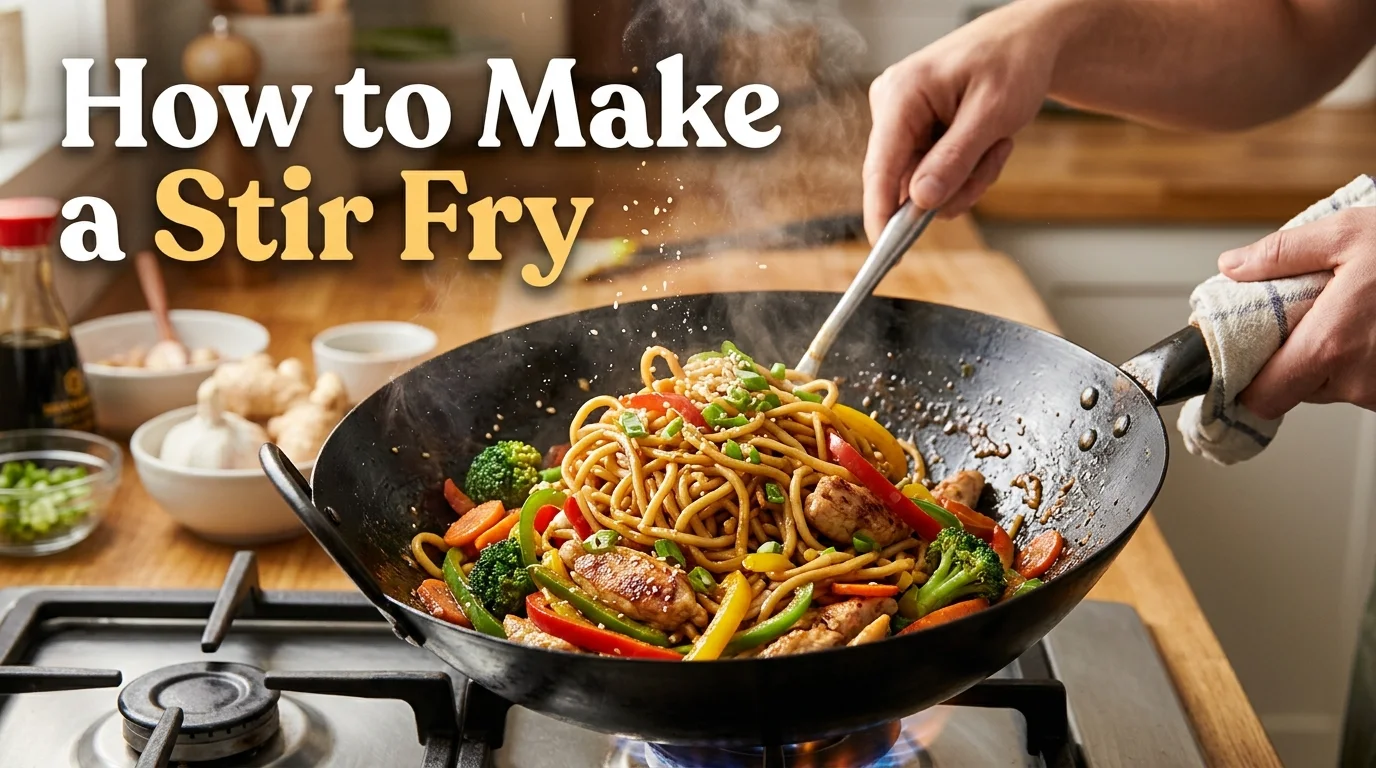
Learning how to make a stir fry is mostly about preparation, heat, and cooking order. Get those three things right, and vegetables stay crisp while meat or tofu browns properly. Then finish everything with a simple sauce in minutes.
A good stir-fry starts with every ingredient prepared before the pan gets hot. Cook small amounts over high heat, starting with ingredients that take the longest. Add quick-cooking vegetables later, then pour in the sauce near the end to keep the meal glossy, not soggy.
| Quick guide | What to do |
|---|---|
| Preparation | Slice everything before heating the pan |
| Best pan | Wok or large, wide frying pan |
| Heat | High once cooking starts |
| Oil | Use a small amount of neutral cooking oil |
| Vegetables | Add firm vegetables before softer ones |
| Protein | Slice thinly and cook in batches when needed |
| Sauce | Add near the end |
| Total cooking time | Usually around 10–15 minutes after preparation |
| Serve with | Rice, egg noodles, rice noodles, or on its own |
Key Takeaways
- Prepare every ingredient before cooking begins.
- Cut ingredients into similar, bite-sized pieces.
- Heat the pan properly before adding food.
- Avoid filling the pan with too much food.
- Cook firm vegetables before softer vegetables.
- Keep sauces measured and ready beside the hob.
- Add noodles, rice and sauce near the end.
- Serve immediately while the vegetables still have bite.
What You Need for a Good Stir-Fry
You don’t need specialist equipment for this meal. A wok works well because its shape creates a large, hot cooking surface. A wide frying pan can produce excellent results too.
You will also need a sharp knife and a sturdy chopping board. Keep a wooden spoon, spatula or cooking tongs close to the hob. Prepare a plate too, because you may need to remove cooked ingredients temporarily.
Your ingredients can change according to what you have available. A useful formula is protein, vegetables, aromatics, sauce, and either rice or noodles. This approach makes the dish suitable for leftovers and supermarket staples.
A Simple Ingredient Formula
For two people, start with roughly 250g to 300g of protein or a plant-based alternative. Add two or three generous handfuls of vegetables. Finish with enough sauce to lightly coat everything.
Chicken, beef, prawns, tofu and mushrooms all work well. Thin beef strips are especially suited to fast cooking over strong heat. Typify’s guide to topside beef explains why thin slices cook quickly.
Peppers, broccoli, carrots, mushrooms, mangetout and spring onions are reliable vegetable choices. Shredded cabbage also cooks quickly and adds useful texture. Typify’s Hispi cabbage guide includes ideas for using tender cabbage in quick cooking.
How to Make a Stir Fry in 8 Easy Steps
1. Prepare Every Ingredient First
Wash, trim, and slice your ingredients before switching on the hob. Fast cooking leaves little time to chop once the food enters the pan. Keep each ingredient in a separate bowl or small pile.
Cut meat and firm vegetables into thin, even pieces. Smaller pieces cook faster and move more easily around the pan. Keep softer vegetables slightly larger because they need less cooking.
Mix your sauce before you start cooking. This prevents you from searching through cupboards while vegetables soften in the pan. Put cooked noodles or rice within easy reach too.
2. Heat the Wok or Frying Pan
Place your empty wok or frying pan over medium-high heat. Give the metal enough time to heat through. Food should sizzle as soon as it hits the cooking surface.
Add about 1 tablespoon (15ml) of neutral oil once the pan is hot. Rapeseed or sunflower oil works well for everyday cooking. Swirl the oil across the cooking surface before adding your first ingredient.
Don’t add large amounts of cold food at once. This quickly lowers the pan’s temperature and releases trapped steam. Steaming makes browning harder and often leaves vegetables softer.
3. Cook the Protein in Small Batches
Add chicken, beef, prawns or tofu in a single loose layer. Leave enough room between pieces for moisture to escape. Cook two batches if your pan becomes crowded.
Turn or toss the pieces as they colour. Remove cooked protein to a clean plate, as needed. You can return everything to the pan before adding the sauce.
Always cook chicken and pork through until there is no pink meat and the juices run clear. Follow packaging guidance for prepared products and meat substitutes. Keeping pieces evenly sized makes safe, consistent cooking easier. If you are using leftover rice, cool it quickly, chill it within an hour or so, and reheat it only once until it is steaming hot, in line with NHS and Food Standards Agency advice.
4. Add Aromatics Without Burning Them
Garlic, ginger, chilli and spring onion bring plenty of flavour to a quick pan meal. Add them after the first main ingredient has started cooking. They usually need much less time than meat or firm vegetables.
Keep the garlic moving, as finely chopped pieces can burn quickly. Ginger can cook alongside it for a short period. Burnt aromatics can make the entire sauce taste bitter.
You can also reserve some spring onion for serving. Fresh pieces provide contrast against the cooked ingredients. Sesame seeds, coriander or chopped nuts can work the same way.
5. Cook Vegetables in the Right Order
Start with firm vegetables such as carrots, broccoli, and thick pepper strips. Give them a short head start before adding softer ingredients. Mushrooms, mangetout, bean sprouts, and shredded greens usually need less time.
Aim for vegetables that have softened slightly but still retain texture. They will continue cooking when the sauce enters the pan. Removing them too late often creates a soft final dish.
Cabbage is especially useful because it cooks quickly and absorbs savoury flavours. Thinly sliced pointed cabbage can enter during the later cooking stage. Read more about choosing and preparing Hispi cabbage if you want another vegetable option.
6. Return Everything to the Pan
Return any cooked protein once your vegetables are nearly ready. Toss the ingredients together to even out the temperatures. Keep the heat reasonably high during this stage.
Add cooked noodles now if you want them incorporated into the dish. Cooked rice also works, although many people prefer serving it separately. Break noodles apart before adding them so they mix easily.
Don’t keep cooking longer than necessary. Most ingredients should already be almost ready. The remaining steps are mainly about coating and heating everything together.
7. Add the Sauce Near the End
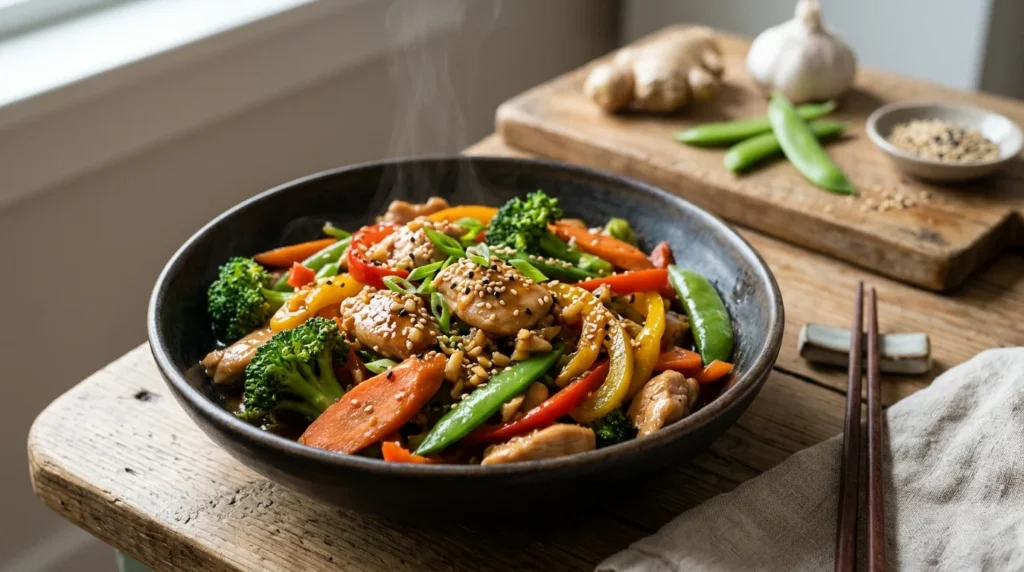
Pour the prepared sauce around the hot pan instead of dumping it in one spot. Toss everything quickly so each ingredient receives a light coating. Cook only until the sauce becomes hot and glossy.
A simple sauce can combine soy sauce, ginger and a little honey. You can add rice vinegar, chilli sauce or sesame oil for extra flavour. Keep quantities modest because excess liquid can soften the vegetables.
Taste before adding extra salt. Soy sauce and many bottled sauces already contain plenty of seasoning. You can always add more sauce at the table.
8. Serve Straight Away
Take the pan off the heat once everything is cooked and coated. Spoon the food onto warm plates or bowls immediately. Leaving it in the hot pan keeps delicate ingredients cooking.
Serve with noodles, steamed rice, or brown rice, depending on preference. Add fresh spring onion, chilli or sesame seeds at the table. A squeeze of lime can brighten richer sauces.
Fast serving matters because texture is part of the appeal. Crisp vegetables and freshly coated noodles taste better before they sit in sauce. Prepare plates before cooking if you want dinner on the table quickly.
Easy Homemade Stir-Fry Sauce
A basic homemade sauce is useful because you can adjust sweetness, salt, and heat. Mix it before cooking and keep it beside the hob. The quantities below are suitable for roughly two portions.
- 2 tablespoons (30ml) reduced-salt soy sauce.
- 1 tablespoon (15ml) water.
- 1 teaspoon honey or soft brown sugar.
- 1 teaspoon rice vinegar or lime juice.
- 1 teaspoon grated fresh ginger.
- 1 small garlic clove, finely grated.
- Optional chilli flakes or chilli sauce.
- Optional ½ teaspoon sesame oil for finishing.
Mix the ingredients until the honey or sugar dissolves. Taste before it goes into the pan, and adjust the balance carefully. Add more water if the mixture tastes too strong.
For a thicker coating, you can mix a little cornflour with cold water separately. Add a small amount near the end while the pan remains hot. The liquid should become glossy quickly, so avoid using too much.
Why Stir-Fries Turn Soggy
Overcrowding is one of the most common problems. Too much food releases moisture faster than the pan can evaporate it. The ingredients then simmer or steam instead of frying.
Wet vegetables cause a similar problem. Drain washed produce and pat it dry before cooking. Defrosted vegetables may also need draining before they go into the hot pan.
Adding sauce too early creates more moisture during the main cooking stage. Cook the ingredients first, then add the sauce near the end. This preserves texture while still giving the meal plenty of flavour.
Can You Make One Without a Wok?
Yes, a large frying pan works well in most UK kitchens. Choose the widest pan you have so ingredients can spread across the hot surface. Good heat and enough space matter more than owning specialist cookware.
A heavy pan may take slightly longer to heat. Once hot, it can hold its temperature well during cooking. Avoid filling it to the edges with cold ingredients.
Cook in batches when using a smaller pan. This takes a few extra minutes but often improves browning. Combine everything again during the final sauce stage.
Frequently Asked Questions
Can I learn how to make a stir-fry without a wok?
Yes, you can use a large frying pan instead. Heat it thoroughly and keep ingredients in a loose layer. Batch cooking will help if your pan has limited space.
What vegetables are good for stir-frying?
Broccoli, peppers, carrots, mushrooms, and mangetout are dependable choices. Pak choi, bean sprouts and shredded cabbage also cook quickly. Add harder vegetables before ingredients that soften faster.
What oil should I use?
Choose a neutral oil that suits high-temperature frying. Rapeseed and sunflower oils are convenient options in UK supermarkets. Use sesame oil sparingly for flavour near the end.
Should I cook noodles before adding them?
Follow the instructions on your noodle packet first. Many varieties need boiling or soaking before they enter the pan. Drain them well so they don’t introduce unnecessary water.
When should I add stir-fry sauce?
Add sauce once the protein and vegetables are nearly cooked. Toss quickly while the pan stays hot. This helps ingredients stay coated without becoming waterlogged.
How do I stop vegetables from becoming soft?
Use a hot pan, dry vegetables, and avoid overcrowding. Add firm vegetables before softer varieties. Stop cooking while the vegetables still have a little bite.
Make Your Next Midweek Meal Better
A dependable stir-fry doesn’t require complicated ingredients or expensive cookware. Preparation, strong heat, and sensible cooking order make the biggest difference. Once you understand those basics, you can adapt the meal to almost anything in your fridge.
Start with one protein, two or three vegetables, and a simple sauce. Keep portions small enough for your pan to stay hot. Then change the ingredients each week while using the same reliable method.