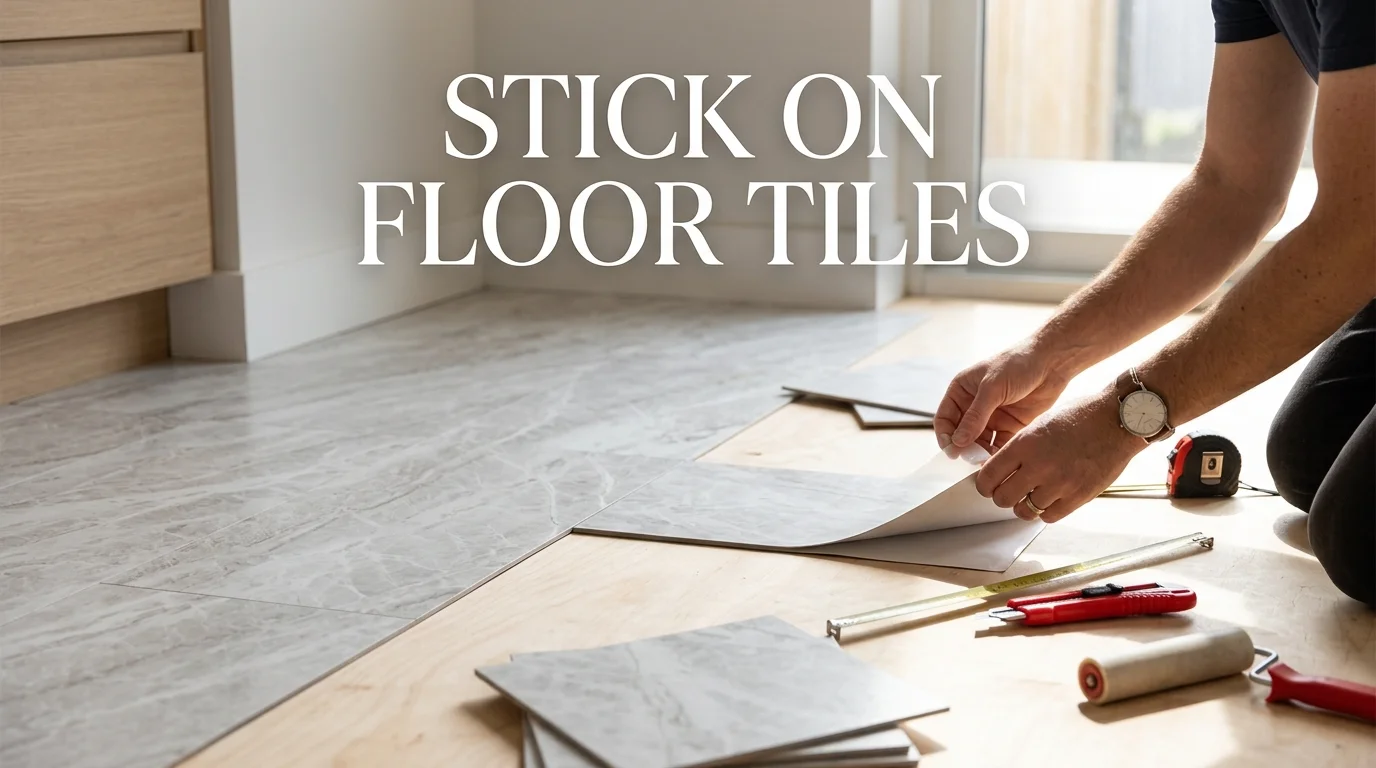
Stick on floor tiles can refresh a kitchen, bathroom, hallway, or rental without grout or specialist fitting. The result lasts longer when the base is flat, clean, dry, stable, and compatible with the chosen adhesive. It works best as a cosmetic update, not a repair for damaged subfloors.
Self-adhesive flooring appeals because it reduces mess, tools, and installation time. Current UK ranges include stone, wood, geometric, marble, and Victorian-style designs. Yet the finish depends more on preparation than pattern choice.
Key Facts at a Glance
| Question | Practical answer |
|---|---|
| Best base | Smooth, dry, clean, stable, and level |
| Common material | Self-adhesive vinyl |
| Good uses | Kitchens, utility rooms, hallways, and selected bathrooms |
| Main risk | Lifting, gaps, or visible bumps from poor preparation |
| DIY difficulty | Usually manageable for careful beginners |
| Best buying check | Room suitability, pack coverage, thickness, and fitting instructions |
| Rental use | Product-specific, so check removability and landlord rules |
Key Takeaways
- Surface preparation matters more than the pattern you choose.
- Water-resistant vinyl still needs careful fitting around wet areas.
- Deep grout lines, dents, dust, grease, and moisture can weaken the result.
- Buy from a range that clearly states suitable rooms and compatible surfaces.
- Dry-lay the pattern before removing backing paper.
Are Stick On Floor Tiles a Good Choice for UK Homes?
They can be a sensible choice for cosmetic updates and smaller budgets. Which? recently found self-adhesive tiles easy to cut and apply. Its testing also showed weaker bonding where the existing surface was uneven.
The strongest use case is a stable room with a sound subfloor. Decorative vinyl squares suit patterned makeovers, while planks can create a timber-style look. Repositionable products may suit temporary projects, but removal claims vary by range.
| Type | Advantages | Drawbacks | Best suited to |
|---|---|---|---|
| Patterned vinyl squares | Easy layout, many decorative styles, simple replacement | Seams need careful alignment | Kitchens, utility rooms, compact bathrooms |
| Wood-effect planks | Longer visual lines, timber appearance, flexible layouts | Misalignment can become obvious across long runs | Bedrooms, hallways, home offices |
| Removable or repositionable ranges | Useful for temporary changes where approved | Adhesive strength and removability vary | Rentals and short-term makeovers |
| Permanent self-adhesive vinyl | Stronger long-term bond when correctly fitted | Harder to remove cleanly later | Owned homes and longer-lasting updates |
For most UK DIY projects, standard self-adhesive vinyl is the safest starting point. Choose a product approved for the room and existing surface. Avoid buying only by colour, pattern, or pack price.
What to Check Before Buying
Start with the product specification, not the photograph. Check thickness, pack coverage, wear claims, room suitability, and compatible surfaces. Then compare how the manufacturer describes water resistance and removability.
Current UK retailers carry a wide mix of formats and price points. Homebase’s self-adhesive range includes patterned, marble, wood, stone, and plain options. Dunelm’s current range also includes many self-adhesive styles for home projects.
Use this buying checklist before ordering:
- Confirm the product is suitable for floors, not walls only.
- Check whether the range suits kitchens, bathrooms, or other damp spaces.
- Read the approved subfloor list in the fitting instructions.
- Compare pack coverage rather than pack price alone.
- Check tile or plank thickness if adjoining another floor.
- Review cleaning guidance before choosing a textured or light finish.
- Confirm whether the adhesive is permanent, removable, or repositionable.
A sample can prevent an expensive visual mistake. View it in daylight and evening light before ordering the full quantity. Also test how its texture feels underfoot in the intended room.
Which Rooms Work Best?
Kitchens suit wipeable vinyl when the base is smooth and stable. Clean spills quickly, especially near seams and edges. Typify’s kitchen shelves guide can help coordinate practical storage choices.
Bathrooms need more caution because moisture can reach edges and joints. Many ranges are sold as water-resistant, but that does not make every installation waterproof. Typify’s bathroom design guide covers ventilation, moisture control, and practical surface choices.
Hallways and utility rooms can work well when the product suits regular foot traffic. Bedrooms and home offices usually place less wear on the surface. Stairs need a product specifically approved for that use, not a general flooring tile.
Renters should check tenancy terms before fitting permanent adhesive products. Some ranges are marketed as removable, while others use stronger permanent backing. Always test a spare piece in a hidden area when the manufacturer permits testing.
The Surface Matters More Than the Adhesive
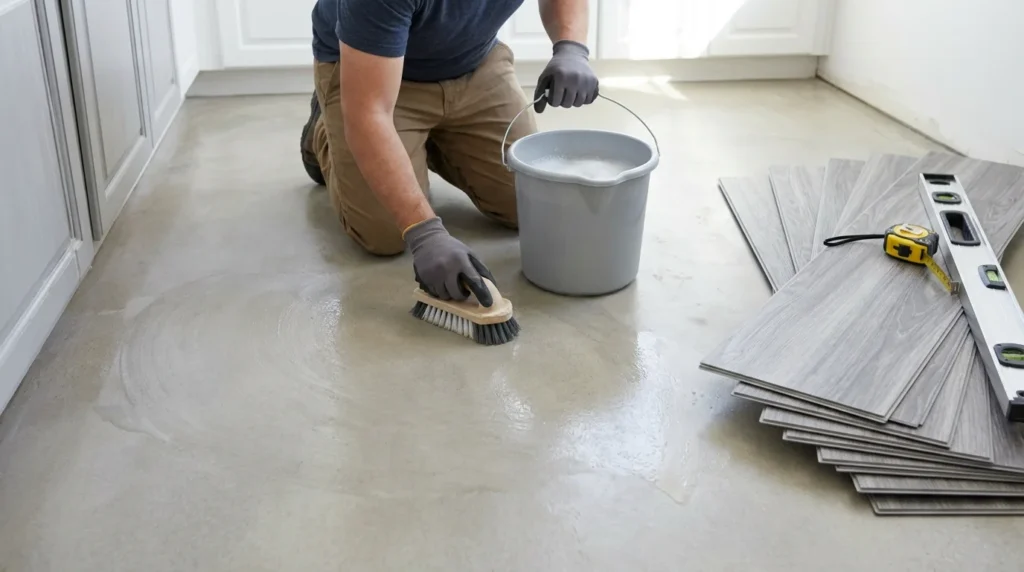
The base must be clean, dry, flat, and firmly attached. Dust and grease can stop the adhesive from making full contact. Repair raised edges, cracks, or loose sections before fitting.
Existing ceramic tiles may work if they are secure and smooth enough. Deep grout joints can show through flexible vinyl or reduce contact underneath. Some projects need filling or levelling before the new covering goes down.
Old sheet vinyl can also create problems when dents remain from heavy appliances. Which? reported this issue during a recent UK test. The affected self-adhesive covering needed extra help because the base was not flat.
Never use a decorative covering to hide active damp or structural movement. Fix leaks, soft areas, or unstable flooring before starting cosmetic work. Typify’s water damage guide explains why drying comes first.
How to Fit Peel-and-Stick Flooring in 7 Steps
You need basic measuring and cutting tools before starting. A tape measure, pencil, straightedge, sharp knife, and roller are common choices. Check the product instructions for any primer or additional preparation.
- Measure the room. Record the full floor area, including awkward recesses.
- Prepare the base. Clean, dry, repair, and level the surface as required.
- Find your starting line. Mark a straight reference line for the first run.
- Dry-lay the pattern. Check alignment and avoid narrow slivers at visible edges.
- Peel and place carefully. Expose backing gradually and keep the first pieces square.
- Press each piece firmly. Work across the surface and remove trapped air.
- Cut edges last. Measure each final piece and use a straightedge for neat cuts.
Which? recommends finding the room centre and dry-laying before final placement. That approach can improve symmetry and reduce thin edge pieces. Always follow the product’s instructions if they specify a different starting method.
Do not rush the first row or reference line. A small error can multiply across several rows and expose uneven gaps. Check alignment repeatedly before firm pressure makes repositioning difficult.
Common Mistakes That Cause Lifting or Poor Results
Skipping cleaning is one of the easiest mistakes to make. Fine dust, polish, grease, or soap residue can sit between adhesive and subfloor. Clean using the method recommended for the existing surface and chosen product.
Fitting over bumps creates another common problem. Thin vinyl follows the shape underneath rather than hiding it. A smooth base produces straighter joints and a more convincing finished surface.
Another mistake is ignoring room conditions during installation. Cold, damp, or recently washed surfaces may not suit the adhesive. Follow temperature, drying, and curing instructions printed by the manufacturer.
Finally, do not assume every product tolerates standing water. WallPops UK describes its vinyl tiles as water-resistant and washable. Product-specific care still matters around baths, showers, sinks, and external doors.
How Much Should You Buy?
Measure the longest room length and multiply it by the widest room width. Then account for alcoves, cupboards, and sections that change the basic rectangle. Convert the total area into packs using the stated coverage.
Buy enough extra material for cuts, damaged pieces, and future repairs. Pattern matching or angled rooms may create more waste than simple square layouts. Keep spare pieces flat and protected after the job is complete.
Do not compare products using pack price alone. One pack may cover more floor than another. Cost per square metre gives a clearer comparison for budgeting.
Verdict: Where This Flooring Makes the Most Sense
For most UK DIYers, choose self-adhesive vinyl only when the base is already sound. It works best as a quick cosmetic upgrade, not a cure for damaged flooring. Before choosing the pattern, prioritise room suitability, preparation, and clear fitting instructions.
Square tiles are a practical choice for compact rooms and decorative designs. Planks suit longer spaces where a timber-style direction can visually lengthen the room. Temporary ranges make sense only when their removal claims match your tenancy needs.
If the existing surface needs major levelling, repair that first or consider another floor covering. A good adhesive cannot correct movement, deep dips, or moisture problems. The most durable result starts below the visible finish.
Frequently Asked Questions
Are Stick On Floor Tiles Waterproof?
Many vinyl products are marketed as water-resistant or washable, not fully waterproof. Water can still reach seams, edges, or the subfloor if fitting is poor. Check the exact product instructions before using it in a bathroom.
Can self-adhesive tiles go over existing ceramic tiles?
They can work over secure, clean, and sufficiently flat ceramic surfaces. Deep grout lines may need filling because flexible vinyl can reveal them later. Confirm compatibility in the product instructions before installation.
How long do self-adhesive tiles last?
No single lifespan applies to every product or room. Wear depends on product quality, foot traffic, preparation, moisture, and installation. Correct fitting usually matters more than choosing the boldest durability claim.
Are peel-and-stick tiles suitable for renters?
Some removable ranges are designed for temporary decorating. Permanent adhesives may leave residue or damage the existing finish when removed. Check both the tenancy agreement and the manufacturer’s removal guidance before fitting.
Plan the Rest of the Room
Treat the new surface as one part of the room rather than an isolated purchase. Coordinate colours with cabinets, walls, lighting, and nearby flooring before ordering. Browse Typify’s Home Improvement guides for related renovation decisions.
If you are changing several connected areas, compare finishes across doorways first. A nearby staircase may need a different surface with stronger grip and wear performance. Typify’s stair carpet guide explains the main choices for busy UK homes.
Start by checking your existing base, then shortlist products that officially suit that surface. Order samples where available and read fitting instructions before buying full quantities. That sequence reduces costly mistakes and gives the adhesive the best chance to perform.