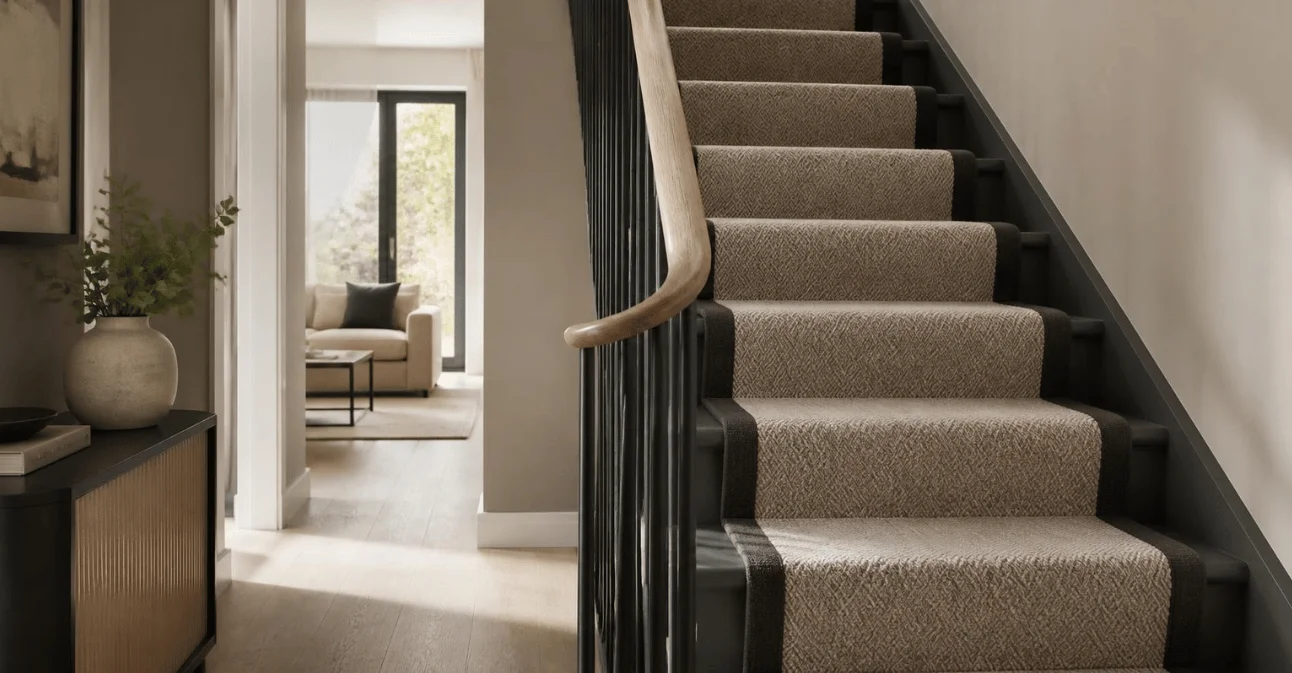
The right stair carpet must handle concentrated foot traffic while still feeling comfortable and looking good. Stairs place more pressure on flooring than most flat rooms. Your choice should therefore start with durability, construction, household needs, and fitting quality.
Quick answer: For most UK homes, choose a dense, stair-rated twist pile with firm underlay and professional fitting. Wool blends suit buyers prioritizing resilience and comfort, while polypropylene suits tighter budgets and spill-prone households. Pick a runner to show timber edges or full-width coverage for more warmth and sound reduction. Elsewhere on the site: Outside Tap.
Key Facts at a Glance
| Buying decision | Practical starting point |
|---|---|
| Best general pile | Dense, short twist pile |
| Premium fiber choice | Wool or an 80/20 wool blend |
| Practical family choice | Stair-rated polypropylene or durable synthetic |
| Best for homes with pets | Dense cut pile without loose loops |
| Runner or full width | Runner for exposed timber; full width for warmth and quieter stairs |
| Underlay | Firm, dense product approved for stairs |
| Current material prices | Roughly £12 to £70+ per m² across current UK stair-suitable ranges |
| Fitting | Professional fitting is sensible for secure tension and neat nosings. |
| Colors that hide wear | Mid-tones, flecks, heathers and restrained patterns |
| Before ordering | Confirm the carpet is specifically suitable for stairs. |
What Makes Carpet Suitable for Stairs?
A staircase concentrates repeated pressure along each tread and front edge. Softness alone therefore tells you little about suitability. Density, pile height, fibre resilience, backing, and the stated usage rating matter more.
A shorter, densely constructed surface usually keeps its shape better under repeated footfall. Which? recommends low-pile, densely woven options for stairs and stresses choosing suitable underlay. It also identifies twist and loop constructions as practical choices for busy areas.
Do not assume an expensive carpet automatically works well on steps. Some deep, luxurious piles suit bedrooms better because repeated pressure can flatten their surface. Check the manufacturer’s room-suitability information before choosing by color or softness.
Which Stair Carpet Material Is Best for UK Homes?
Different fibers solve different household problems. Wool prioritizes resilience and feel, while synthetics often focus on stain resistance and price. The strongest choice depends on traffic, children, pets, cleaning habits, and budget.
| Material | Advantages | Drawbacks | Best suited to |
|---|---|---|---|
| 80/20 wool blend | Resilient, comfortable, strong appearance retention | Costs more than many synthetics | Busy homes wanting durability and comfort |
| 100% wool | Warm, natural feel and good resilience | Higher price and product suitability vary. | Premium interiors and lower-spill households |
| Polypropylene | Affordable and stain-resistant | Resilience varies between ranges. | Families, rentals and tighter budgets |
| Nylon or polyamide | Strong wear resistance and good durability | Fewer familiar UK retail choices | High-traffic stairs |
| Natural fibers | Distinctive texture and firm appearance | Can be less forgiving with spills | Design-led interiors with suitable products |
An 80/20 wool blend is a strong starting point for many family homes. Wool supplies resilience, while the synthetic component improves wear performance. UK buying guidance commonly recommends wool blends for high-traffic staircases.
Pure wool remains appealing when natural texture and comfort matter most. Yet not every wool product has been designed for repeated stair use. Homebuilding specifically advises checking whether a chosen wool product is suitable for stairs.
Polypropylene can make more sense where spills, children, pets, or cost drive the decision. It is widely available in stain-resistant ranges and can offer strong value. Compare usage ratings and density rather than judging every synthetic carpet by fiber alone.
Twist, Loop or Deep Pile?
A dense twist pile is the easiest general recommendation for a busy staircase. Tightly twisted yarns can resist visible flattening and keep a neat surface. Current UK stair ranges also feature twist construction heavily for high-traffic areas.
Low-level loop carpet can also perform well when the product carries a suitable stair rating. Loose or chunky loops need more care in homes with clawed pets. A caught claw can pull or damage exposed loops.
Deep Saxony-style piles create a softer, plusher appearance in low-traffic rooms. They are usually less practical across stair nosings because the longer pile compresses more visibly. A shorter construction also keeps each step’s edge more clearly defined.
Stair Runner or Full-Width Coverage?
Both formats can work well when fitted correctly. Your staircase condition and preferred appearance should guide the choice. Think about sound, exposed timber, cleaning, and decorating before deciding.
| Feature | Runner | Full-width coverage |
|---|---|---|
| Appearance | Shows timber along both sides | Covers the complete staircase |
| Style | Strong decorative feature | Softer, continuous finish |
| Sound reduction | Good | Usually greater coverage |
| Existing stair condition | Visible edges need a good finish. | Can conceal worn timber |
| Patterns | Excellent for stripes and borders | Works well with plain or patterned designs |
| Replacement | Central covering can be replaced. | The entire width usually needs replacing. |
| Best for | Character stairs and design-led schemes | Comfort, warmth and full coverage |
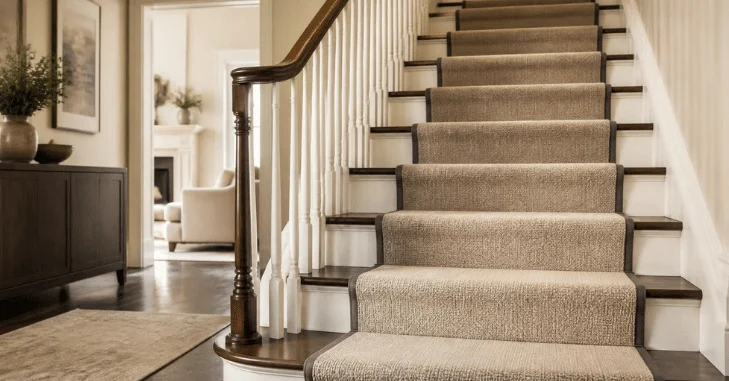
A runner works especially well when attractive timber deserves to remain visible. The exposed sides must still be prepared and finished neatly. Typify’s painted-stairs guide covers preparation and finishes for visible wooden steps.
Full-width carpeting suits households wanting a softer and more enclosed finish. It also hides timber that would require extensive cosmetic work. Measure first because winders and landings can increase cutting and waste.
How Much Do Carpeting Stairs Cost in the UK?
Material prices vary considerably by fiber, construction, brand, and current promotion. Current UK retailer listings include stair-suitable products from roughly £12 per square meter. Other listed options sit around £35 to £60 per square meter before fitting.
Premium wool can move above that range. For example, a current 100% wool stair-suitable Tapi product is listed above £60 per square meter. Retail prices change frequently, so treat any published figure as a budgeting reference.
Your final bill also includes more than the visible flooring. Underlay, grippers, preparation, fitting, removal, landings, winders, and pattern matching can affect the quote. Compare written quotations using the same specification before deciding which offer costs less.
Why Underlay and Fitting Matter
Underlay supports the flooring and can reduce noise through the staircase. The correct product should be firm enough to control movement around each nosing. Which? Also recommends appropriate underlay when carpeting stairs.
Do not automatically choose the thickest, softest underlay available. A fitter can confirm which density works with your selected product and staircase. Manufacturer compatibility should take priority over a generic thickness recommendation.
DIY fitting is possible for someone with the right tools and experience. Yet stairs demand accurate tension, cutting, gripper positioning, and secure edges. Professional fitting is sensible when you are unsure about any of those tasks.
How to Measure Before Ordering
Start by recording the staircase width, tread depth, riser height, number of steps, and landing dimensions. Measure several steps because older staircases may not be perfectly uniform. Patterned material also needs enough allowance for repeat alignment.
A straight flight is easier to calculate than winders or half-landings. Curved steps can require separate measurements because their widths and depths change. Ask your chosen fitter to verify quantities before ordering expensive material.
Use this measurement checklist before requesting quotes.
- Staircase width at several points
- Number of treads and risers
- Tread depth and riser height
- Number and shape of winders
- Landing length and width
- Pattern repeat, if applicable
- Runner width and desired exposed border
- Existing gripper and underlay condition
Taking these details to each retailer makes quotations easier to compare. It also reduces the chance of comparing different material quantities. Keep the measurements with photographs if your initial quote is arranged remotely.
Choosing Colors and Patterns That Age Well
Plain cream can look striking when newly installed, but it can show marks quickly. Extremely dark shades may reveal pale lint, dust, and pet hair. Mid-tone heathers, flecks, taupes, muted greys, and mixed patterns often disguise everyday traffic better.
Patterns can also reduce the visibility of minor marks and pile shading. Stripes draw attention along the staircase, while herringbone adds texture without using strong color. Check larger samples in both daylight and evening lighting before ordering.
Your staircase usually connects several decorated spaces, so color should not be chosen in isolation. Compare samples against the hall, landing, walls, and nearby furniture. Typify’s modular sofa guide also explains coordinating fabrics and finishes within UK interiors.
Cleaning, Wear and Replacement
Vacuum stairs regularly because grit can work into the fibers around busy tread areas. Use the cleaning method recommended for the specific fiber and stain treatment. Deal with spills quickly instead of saturating the area with unsuitable cleaners.
Inspect the front edge of each step because this area often shows wear first. Look for loose sections, damaged edges, thinning pile, or movement beneath your feet. Secure fitting matters more than preserving a carpet that has become unstable.
Serious leaks require a different response from everyday cleaning. Wet flooring and underlay may hold moisture beneath the visible surface. Typify’s water-damage guide explains the first actions after significant household water exposure.
The Verdict: What Should Most UK Homes Choose?
For most busy households, start with a dense twist pile carrying a clear stair or heavy-domestic suitability rating. An 80/20 wool blend offers an appealing balance of resilience, comfort, and appearance. A quality synthetic makes sense when stain resistance and lower upfront cost matter more.
Choose full-width coverage when warmth, sound reduction, and concealing older timber are priorities. Choose a runner when you want visible wood and a stronger decorative feature. In either case, spend time on underlay, accurate measurements, and secure fitting.
Order several samples before making the final decision. Compare them on the actual staircase at different times of day. Then get an itemized quote covering material, underlay, accessories, preparation, and fitting.
Frequently Asked Questions
What is the best stair carpet for a busy family home?
A dense, short twist pile is a sensible starting point for heavy household traffic. Wool blends combine comfort with good resilience, while quality synthetics offer practical stain resistance. Always confirm the individual product carries a suitable stair-use rating.
Is wool better than polypropylene on stairs?
Neither fiber wins for every household. Wool and wool blends usually appeal to buyers prioritizing resilience, feel, and natural appearance. Polypropylene can suit families prioritizing stain resistance, easy cleaning, and lower purchase prices.
Do stairs need underlay?
Most fitted carpet installations benefit from underlay selected for the product and staircase. It can improve comfort, reduce sound, and support the covering above. Ask the manufacturer or fitter which type matches your chosen flooring.
Should I choose a runner or full coverage?
Choose a runner when you want finished timber visible along both sides. Full coverage suits homes prioritising warmth, softer acoustics, and concealment of worn steps. The better format depends on your staircase condition and decorating goals.
Can I install carpet on stairs myself?
An experienced DIYer with suitable tools may be able to complete a straightforward flight. Mistakes around tension, grippers, nosings, or cuts can affect appearance and security. Use a professional fitter if you cannot confidently complete those stages.
Which color works best on busy stairs?
Mid-tone shades usually balance appearance and everyday practicality well. Flecked, heathered, and subtle patterned designs can disguise dust and minor marks. Test samples in your own hallway because lighting changes color significantly.
Make Your Final Choice
Prioritise construction and suitability before choosing the final shade. Samples, accurate measurements, proper underlay, and a detailed fitting quote can prevent expensive mistakes. For more renovation advice, browse Typify’s Home Improvement guides before planning your next project.