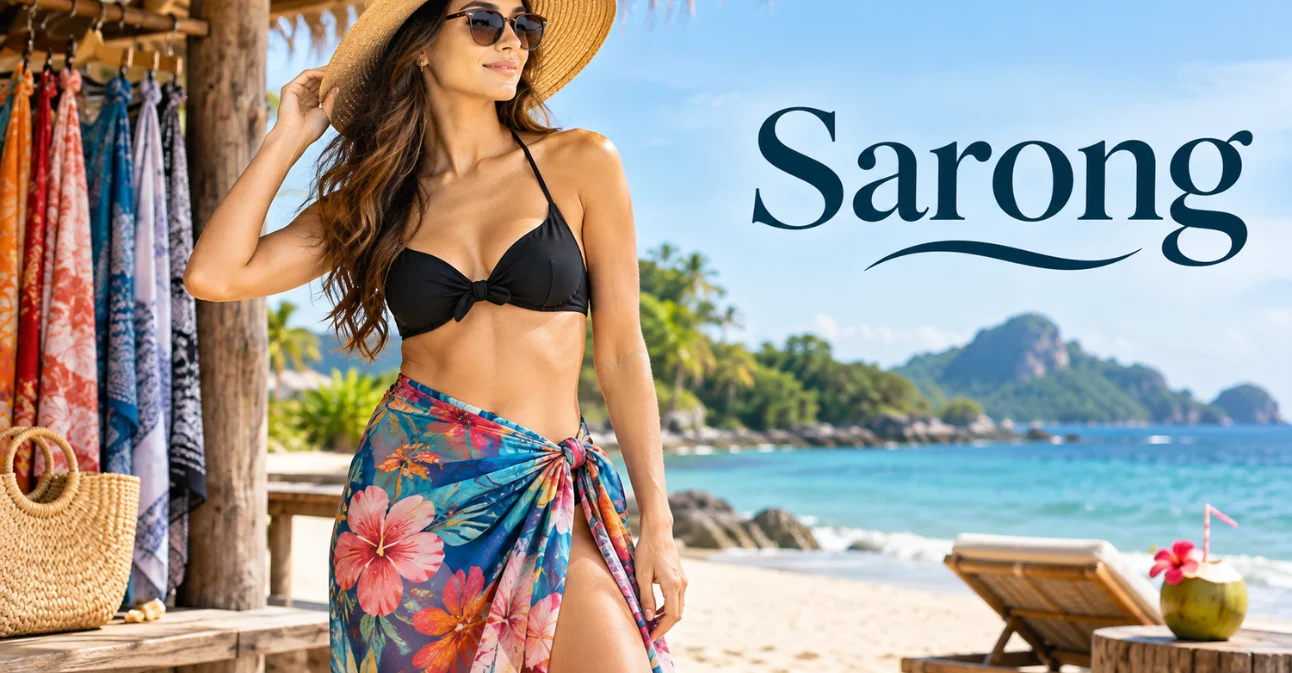
A sarong is a large piece of lightweight fabric wrapped around the waist or body. It has deep roots in Southeast Asian dress and is now widely used as a beach cover-up in Britain. Its simple shape makes it easy to pack, style, and adapt for holidays.
For UK travellers, this versatile wrap can replace several bulkier items in a suitcase. You can wear one as a skirt, dress, shoulder wrap, or swimsuit cover-up. The right fabric and size will determine how comfortable and practical it feels.
| Key question | Practical answer |
|---|---|
| What is it? | A length of tube of fabric worn wrapped around the body |
| Common UK use | Beach and poolside cover-up |
| Popular fabrics | Cotton, rayon, viscose, and lightweight blends |
| Typical styles | Waist wrap, long skirt, short skirt, and simple dress |
| Best for | Beach holidays, pools, cruises, and warm-weather travel |
| Main advantage | Lightweight, compact, and adaptable |
| What to check | Size, opacity, fabric, drape, and care instructions |
Quick answer: A lightweight wrap you can tie around your waist or body. In the UK, it is commonly bought as a beach or swimwear cover-up. Choose breathable fabric, enough material for your preferred tying style, and a print or color that works with several swimsuits.
What Is a Sarong?
It is traditionally a long piece of fabric worn around the waist or body. The term has Malay origins, while related wrapped garments have long histories across several regions. Modern British fashion often uses the word for lightweight beach wraps.
Traditional garments and Western beachwear versions should not always be treated as identical. Their construction, materials, patterns, and cultural uses can differ considerably. Knowing that distinction gives useful context when shopping or travelling.
In contemporary UK wardrobes, the beach version is valued mainly for convenience. It slips over swimwear without requiring a complete change of clothes. It also takes little room inside a beach bag or suitcase.
Why This Wrap Works So Well for UK Holiday Wardrobes
British holidays can involve several clothing needs within one day. You might move from breakfast to the pool, beach, and café before returning to your accommodation. A lightweight wrap makes those changes easier without adding another bulky garment.
Packability is another useful advantage. Folded fabric generally occupies less luggage space than structured beach dresses or heavier cover-ups. This can help when packing for a weekend break or travelling with cabin luggage.
The style is adaptable as well. You can change how much leg or upper-body coverage you have by altering the fold. This flexibility makes one piece work in different resort settings. UK weather creates another reason to favor adaptable clothing. Even summer days can shift between strong sunshine, clouds, and a cooler breeze. A larger wrap can move from your waist to your shoulders when conditions change.
Choosing the Right Fabric
Fabric affects drape, comfort, drying time, and appearance. A material that looks attractive online may feel less suitable once exposed to heat or water. Consider where you plan to wear the wrap before choosing by print alone.
Cotton
Cotton feels familiar and breathable against the skin. It can suit travellers who prefer natural fibres and a slightly more substantial feel. Thicker cotton can take longer to dry after getting wet.
Light cotton also works beyond the beach. You may use a larger piece as a shoulder covering or casual scarf. Check the care label because colors and finishes can affect washing requirements.
Rayon and Viscose
Rayon and viscose fabrics often create a softer, flowing appearance. They can drape closely around the body without the stiffness of heavier materials. That makes them popular for knots and dress-style arrangements. Care needs vary between products. Some versions require gentler washing than everyday cotton clothing.
Always follow the manufacturer’s instructions instead of assuming every lightweight wrap handles washing the same way.
Synthetic and Blended Fabrics
Synthetic blends can be useful when quick drying matters. They may also resist creasing better during travel, depending on the exact construction. Texture and breathability can vary considerably between products. Check whether the fabric becomes transparent when stretched or wet.
Product photographs may not make this obvious. Reviews and material specifications can provide more useful clues before buying online.
Sizing: How Much Fabric Do You Need?
No single size fits every beach wrap. Dimensions vary by brand, and intended styling also changes how much fabric you need. Checking measurements is more reliable than relying on labels such as small or large. A smaller design may work well for a short waist wrap. A larger rectangle gives you more freedom for long skirts, dresses, and shoulder coverage.
Extra material also provides more room for secure knots. Think about your preferred coverage before ordering. Measure around the widest area where you expect to tie the fabric. Then compare that measurement with the product dimensions and allow enough overlap for tying.
Body size is only part of the decision. Someone wanting a compact hip wrap needs less material than someone planning several dress styles. Choose dimensions around use rather than a generic size category.
How to Wear a Sarong: 5 Simple Styles
Learning a few basic methods makes the garment much more useful. Start with straightforward arrangements before attempting styles involving complicated twists or knots. Use a mirror to check coverage before leaving your room.
1. Classic Waist Wrap
Hold the fabric behind your waist with one end in each hand. Bring both ends towards the front and tie them securely at one hip. Adjust the overlap until you have the coverage you want.
This is one of the easiest options for walking between your hotel and pool. You can position the knot higher or lower depending on your swimsuit. A double knot may feel more secure if the fabric is slippery.
2. Long Skirt
Wrap the full fabric around your waist without folding much of its length. Let the material fall to your ankles or calves. Secure the upper corners at the side or slightly towards the front. A long skirt gives more leg coverage than a short beach wrap. It works well for a hotel café or a walk around a resort. Check local dress expectations before treating beachwear as suitable away from the pool.
3. Short Beach Skirt
Fold the fabric lengthways before wrapping it around your hips. Tie the ends at one side and adjust the hem so it sits comfortably. Make sure the overlap stays closed while you walk. This style works well when you want minimal extra fabric around your legs.
It is quick to remove before swimming and easy to retie afterwards. A medium or large wrap usually gives better overlap than a tiny version.
4. Simple Halter Dress
Place a large wrap behind your body and bring the top corners forward. Cross them over your chest before tying them behind your neck. Adjust the front carefully so the fabric provides secure coverage. This arrangement needs considerably more material than a waist wrap.
It also works better with soft fabric that drapes comfortably around the body. Test the knot indoors before relying on the style for extended wear.
5. Shoulder Wrap
Open the material fully and place it around your shoulders like a light shawl. Let the ends hang freely or hold them loosely at the front. Avoid tight knots if the fabric creases easily. A shoulder wrap can be useful when a sea breeze arrives later in the day. It also gives temporary coverage over a sleeveless top. This use makes a larger piece more practical for travel.
Wrap vs. Pareo vs. Beach Cover-Up
These terms often overlap in modern retail listings, but they are not historically identical. A pareo has Pacific associations, while this wrap is strongly associated with Southeast Asia and neighboring regions. British retailers may use both terms for similar beach wraps.
| Term | Common modern meaning | Typical form | UK shopping context |
|---|---|---|---|
| Sarong | Wrapped garment or beach wrap | Large fabric piece or tube | Common beachwear term |
| Pareo | Lightweight body wrap | Usually rectangular fabric | Often used for resortwear |
| Beach cover-up | Broad product category | Wrap, dress, shirt, or kaftan | Includes many garment types |
| Kaftan | Loose outer garment | Sewn garment | More structured than a wrap |
The distinction matters most when researching traditional clothing. A modern beach product can borrow the name without copying traditional construction or cultural use. Treat authentic regional garments with more care than a generic high-street swimwear accessory.
How to Style One for a Beach Holiday
Start with the swimwear you already own. A patterned wrap can add interest to a plain black, navy, or white swimsuit. A single-color design can balance swimwear with a stronger print. Footwear should suit the setting, not the fabric. Flat sandals, sliders, or espadrilles can create an easy holiday outfit. Choose shoes that remain practical on sand, pool surfaces, and warm pavements.
Keep accessories simple when the fabric has a strong pattern. Sunglasses, a sun hat, and a practical beach bag may be enough. For more UK fashion inspiration, Typify’s short hairstyles guide can help you plan an easy warm-weather look. Wrinkles can be more noticeable on some fabrics after travelling.
Typify’s guide to choosing a handheld clothes steamer covers portable garment-care options. Always check whether heat or steam is safe for your specific material first.
What to Look for When Buying One in the UK
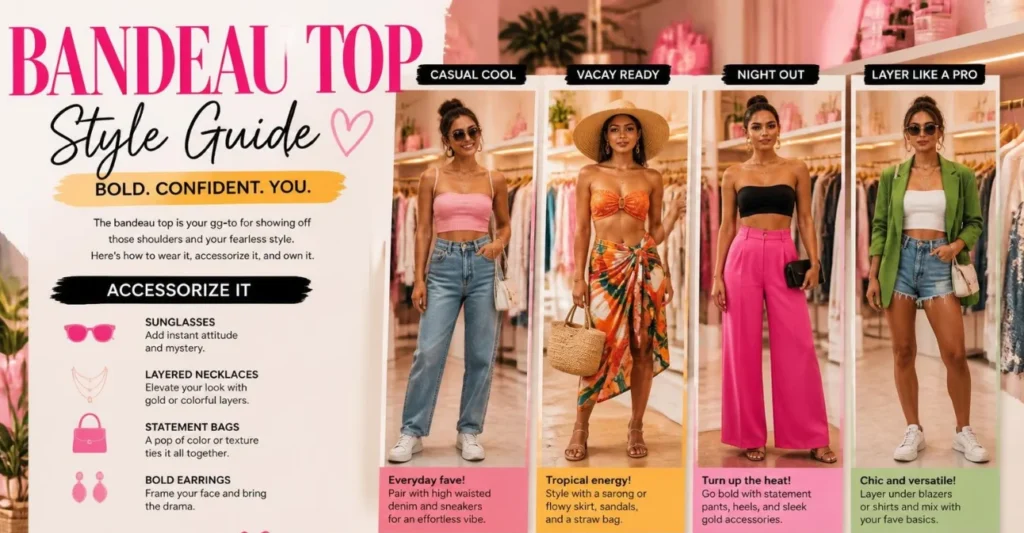
Start by checking exact dimensions. Product images can make a wrap appear larger than it is because model height and styling affect scale. Measurements give you a better idea of the coverage available. Next, read the fiber composition and washing instructions. Think about whether you value softness, quick drying, natural fibers, or easy care most. Also worth reading: Bandeau Top Styling.
No single material offers the perfect balance for every traveller. Check opacity if you want more coverage around hotel grounds or public areas. Thin fabrics may become more transparent in strong sunlight. Light colours can also reveal more than darker or densely patterned designs.
Inspect the finishing details too. Neat hems can improve durability, while decorative tassels add interest but may need extra care. Built-in ties can make fastening easier for people who dislike large knots. Finally, choose something you will wear with several outfits. A versatile colour or pattern earns more space in a suitcase than a piece matching only one swimsuit.
Typify’s vacuum storage bags guide may also help when organising seasonal holiday clothing at home.
Common Mistakes to Avoid
Buying without checking measurements is one of the easiest mistakes. A small piece may look attractive but offer too little overlap for your intended style. Check dimensions against your body and preferred tying method first.
Another mistake is choosing fabric solely by appearance. Heavy material can feel uncomfortable in hot climates, while delicate fabric may demand inconvenient care. Match the textile to the destination and your washing options. Avoid assuming every tying style works with every size. Dress arrangements usually need more fabric than simple waist knots.
Trying several styles before travelling prevents frustrating wardrobe problems on holiday. Finally, remember that beachwear does not automatically suit every setting. Resorts, restaurants, religious sites and local communities can have different expectations about dress. Pack suitable clothing if you plan to move beyond the beach or pool.
Care and Packing Tips
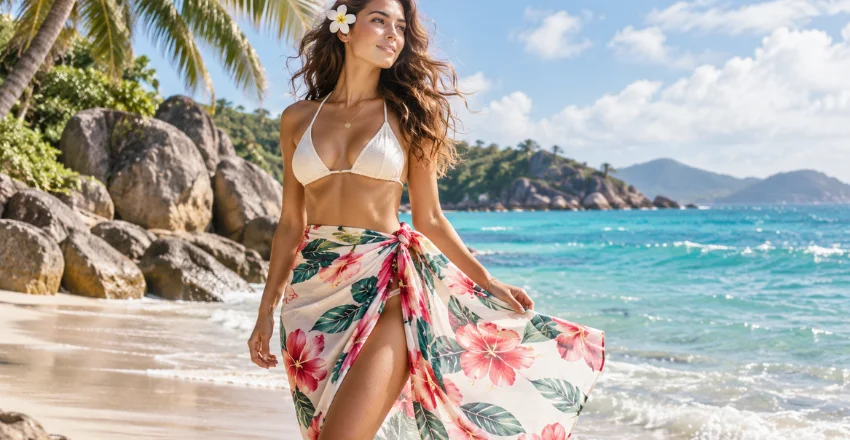
Check the label before washing because fibres and dyes require different treatment. Rinse away chlorine or salt promptly when the manufacturer permits it. Dry the material fully before packing it into luggage or storage. Fold or roll the fabric loosely for travel. Keeping it near the top of your case makes it easy to reach when you arrive. Avoid trapping damp swimwear inside the folded material.
At home, store it clean and dry between holidays. Keep delicate tassels away from zips, hooks and rough accessories that could catch them. Proper storage can keep a favourite wrap ready for several summers.
Is This Wrap Worth Packing?
For many UK holidaymakers, the answer is yes because one lightweight item can perform several jobs. It can provide quick swimsuit coverage, create different skirt styles, and work as a light shoulder wrap. Its compact shape also makes it useful when luggage space is limited.
The biggest benefit is flexibility, not complexity. You don’t need advanced styling skills to make a basic waist wrap work. Choosing enough fabric and practising two or three knots before travelling is usually sufficient.
Choosing Your Next Beach Wrap
A good beach wrap should suit your body, destination and existing holiday wardrobe. Check the measurements, material, opacity and care requirements before choosing a colour or print. Those practical details usually matter more once you start wearing it.
Choose a design that can handle at least two or three uses during your trip. Practise your preferred knots at home, then pack it somewhere easy to reach. One well-chosen piece can make beach-to-hotel dressing considerably simpler.
FAQs
What is a sarong used for?
A sarong is used as a wrapped garment and, in modern British beachwear, as a swimsuit cover-up. Depending on its dimensions, it can also become a skirt, simple dress or shoulder wrap. Traditional uses vary across different cultures and regions.
Can you wear one as a dress?
Yes, a large piece can be tied into several simple dress arrangements. Smaller designs may not provide enough material or secure coverage. Check the dimensions and practise the chosen method before wearing it outside.
What is the best fabric for a beach wrap?
The best fabric depends on your priorities. Cotton offers a familiar breathable feel, while rayon or viscose can provide a softer drape. Lightweight blends may suit travellers who prioritise quick drying and easy packing.
Are these wraps only for women?
No. Men and women wear traditional wrapped garments in several cultures. Western beachwear marketing often focuses more heavily on women, but the basic wrapped format is not inherently gender-specific.
What is the difference between a sarong and a pareo?
The terms have different cultural origins, although modern fashion retailers sometimes use them interchangeably. The term is associated particularly with Southeast Asia, while pareo has Pacific origins. Modern beach versions of both commonly refer to lightweight fabric wrapped around the body.
How do I stop a beach wrap from falling down?
Use enough overlap and tie the corners with a secure knot. Slippery fabric may need a double knot or purpose-made fastening. Test the wrap by walking and sitting before relying on it outside.