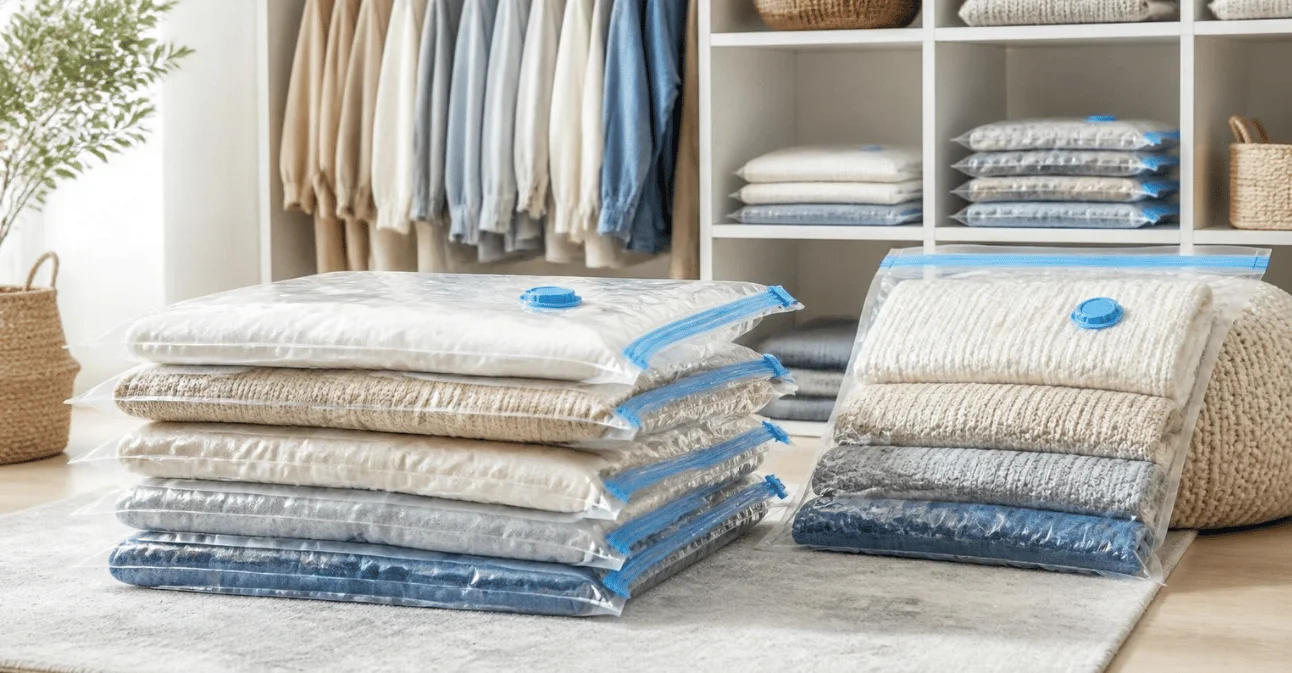
Limited cupboard space can make bulky bedding and seasonal clothes difficult to manage. Vacuum storage bags compress soft textiles by removing trapped air, making them easier to store. The right type can free up useful space without turning your wardrobe into an awkward stack.
| Key question | Practical answer |
|---|---|
| Best for | Seasonal clothes, synthetic bedding, towels, blankets and soft textiles |
| Main types | Flat, cube, hanging and roll-up compression bags |
| Best seal | Secure zip closure with a separate one-way valve |
| Best locations | Dry wardrobes, cupboards and under-bed spaces |
| Avoid packing. | Damp items, leather, memory foam and delicate structured garments |
| Travel use | Useful for reducing bulk, but they do not reduce luggage weight. |
| Best general choice | Reusable mixed-size bags with strong seals and vacuum compatibility |
Quick answer: Vacuum storage bags are most useful for clean, completely dry clothes, towels, and synthetic bedding that can tolerate compression. Choose the size around what you will store, check the zip and valve design, avoid delicate materials, and keep packed bags somewhere dry where they will not be punctured.
Key takeaways
- Choose the bag type around the item and the available storage space.
- Mixed-size packs are useful when your household stores different textiles.
- A secure zip and reliable valve matter more than decorative features.
- Never seal damp laundry or bedding inside a compression bag.
- Avoid heavy compression for down, feather, leather and delicate materials.
- Measure the cupboard, drawer or under-bed space before buying.
- Remember that compressed luggage becomes smaller, not lighter.
How vacuum storage bags work and when they make sense
A compression bag removes much of the air sitting between layers of fabric. You close the zip before extracting air through a valve or manual system. The contents become flatter because soft textiles lose much of their trapped air.
This approach works especially well for items that are bulky rather than heavy. Spare duvets, winter clothes, blankets, and guest bedding are common examples. Towels and children’s outgrown clothes can also take less cupboard space after compression.
The biggest advantage is better use of existing storage rather than creating new capacity. A bulky duvet may become easier to slide beneath a bed or onto a shelf. You can also group seasonal items instead of spreading them across several cupboards.
Which type should you choose?
Different designs suit different storage problems. The best option depends on what you are packing and where the bag will sit. Consider access, shape, and compression method before comparing pack sizes.
| Type | Best for | Main advantage | Main drawback |
|---|---|---|---|
| Flat vacuum bag | Clothes, blankets and bedding | Easy to stack under beds or on shelves | Awkward for thick mixed loads |
| Cube bag | Large bedding and several garments | Holds bulky items in a deeper shape | Takes more space before compression |
| Hanging bag | Coats and longer garments | Keeps clothing arranged vertically | Needs suitable wardrobe height |
| Roll-up bag | Holidays and hand luggage | No cleaner or electric pump needed | Usually offers less compression |
Flat bags
Flat bags suit most everyday home storage. Their shape works well inside wardrobes, drawers and shallow under-bed spaces. They are also easy to label and stack by season.
The main risk comes from overfilling the corners. A stuffed bag places extra strain on its zip and seams. Leave enough room to close the seal without forcing it.
Cube bags
Cube designs suit thick duvets, blankets and larger loads. Their deeper shape gives bulky items more room before air removal. They can be easier to pack than forcing thick bedding into a flat format.
Check the final compressed dimensions against your shelf before ordering. A large bag can remain wide after compression. Measure the storage space rather than relying only on labels like “large” or “jumbo.”
Hanging bags
Hanging versions are made for wardrobe storage. They can suit coats and longer garments that you prefer to keep upright. The format can also reduce the need for a separate shelf.
Compression can still leave creases in structured clothing. Tailored jackets and valuable garments need more careful storage. A breathable garment cover may be safer for items that depend on their shape.
Roll-up travel bags
Roll-up versions push air through one-way channels as you roll the bag. They are useful when a vacuum cleaner will not be available. This makes them practical for hotels, student accommodation and return journeys.
They save suitcase volume rather than baggage allowance. Dense compressed clothing can make it easier to exceed an airline’s weight limit. Weigh your case after packing instead of assuming smaller means lighter.
What size do you need?
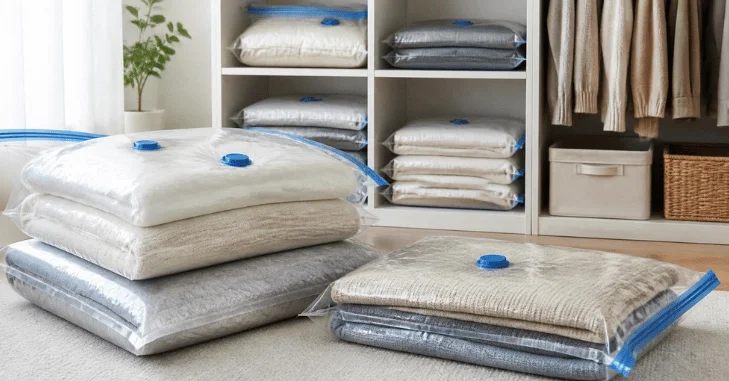
Start with the contents rather than the size name printed on the packet. One brand’s large bag can differ from another brand’s version. Product dimensions provide a more useful comparison than labels alone.
Small formats suit tops, children’s clothing, and lighter seasonal garments. Medium and large options work for jumpers, towels, blankets, and bedding sets. Extra-large formats make more sense for bulky synthetic duvets or several soft items.
Leave room around the opening and valve when packing. An overloaded bag is harder to seal and more likely to develop leaks. Buying one size larger can be sensible when the contents only narrowly fit.
Measure your intended storage area as well. Record the width, depth, and available height inside the cupboard or beneath the bed. That simple step prevents buying a compressed package that still cannot fit its destination.
What can you safely pack?
These bags work best with soft items that can handle pressure and creasing. Every item should be clean and completely dry before packing. Residual moisture can create odors and damage while the contents remain sealed.
Good candidates include:
- cotton T-shirts and casual clothing;
- jeans and sportswear;
- synthetic duvets and pillows;
- blankets and throws;
- towels and bed linen;
- children’s seasonal clothes;
- soft fabric decorations;
- washable soft toys without hard parts.
Clean clothing is also less attractive to clothes moth larvae than soiled fabric. English Heritage advises keeping susceptible clothing clean and sealed for moth protection. Its guidance specifically mentions plastic bags, including vacuum-sealed options, for stored clothing.
What should not be heavily compressed?
Not every soft-looking item belongs inside an airtight compressed package. Some materials depend on loft, structure, or airflow to stay in good condition. Expensive or irreplaceable textiles deserve extra caution.
Avoid packing the following items, or check the manufacturer’s guidance carefully first.
- leather and suede;
- fur;
- memory foam;
- silk and delicate lace;
- wedding dresses;
- heavily embellished clothing;
- structured suits and tailored coats;
- valuable wool or cashmere;
- feather and down bedding;
- items with sharp buckles or exposed zips.
Down and feather products deserve particular care because their filling relies on loft. UK organizing experts quoted by Ideal Home advise against prolonged compression of feather and natural-filled bedding. Breathable storage is generally safer when protecting expensive natural duvets for long periods.
Wool needs similar judgement. Sealing clean knitwear can help keep pests away, yet strong compression may flatten fibers. For valuable woollens, consider breathable storage unless the care instructions support compression.
How to use compression bags correctly
Correct packing matters as much as the bag you buy. Most failed seals come from poor closure, overfilling, or small punctures. A careful process takes only a few extra minutes.
- Wash and dry everything fully. Do not pack clothing that still feels cool or damp after drying.
- Check for sharp parts. Turn zips, buckles, and hard decorations inward where possible.
- Fill without overpacking. Keep clothing below the manufacturer’s stated filling line.
- Close the zip carefully. Run the supplied slider across the seal several times.
- Remove the air steadily. Use the correct vacuum nozzle, pump, or rolling method.
- Close the valve securely. Check the cap before moving the compressed package.
- Inspect the bag later. Recheck the seal if the package starts expanding again.
Store the finished package somewhere clean, dry, and protected from sharp edges. Avoid placing it against exposed screws or splintered tools. If a room already has moisture problems, deal with those before storing textiles there.
Moisture can cause larger problems than a failed seal. Typify’s household water-damage guidance explains why wet areas need proper drying before normal use resumes.
Which features matter most when buying?
Start with the closure system because air leakage defeats the purpose of compression. Look for a positive zip closure and a well-fitted one-way valve on vacuum-operated designs. Customer reviews can also reveal repeated complaints about leaks or broken sliders.
Material strength matters when bags will be reused. Thicker plastic can resist accidental tearing better, but thickness alone does not guarantee an airtight seal. Seam quality, valve construction, and careful handling remain equally important.
Pump compatibility should match the equipment you already own. Some cordless cleaners lack a traditional hose that fits standard valves. A supplied hand pump can be useful if your cleaner does not connect easily.
A mixed-size pack often suits a household better than several identical bags. You can reserve larger versions for bedding and smaller ones for clothes. This prevents wasting oversized bags on small loads.
How much do they cost in the UK?
Basic compression bags are widely available from UK homeware and general retailers. At the time of checking, Argos listed mixed packs at £10 and £15. Ryman also listed a ten-bag mixed-size pack for £11.99.
Prices change, so compare cost per usable bag rather than the headline pack price. A cheaper pack offers poor value if several valves leak after limited use. Consider size range, reusable construction and included pumps alongside price.
Paying more can make sense for repeated seasonal use. Occasional movers or students may prefer a simple budget pack instead. Match durability to how frequently you expect to open and reseal the bags.
Common mistakes that cause leaks or damaged clothes
Overfilling is one of the easiest ways to weaken the seal. It stretches the opening and makes complete closure more difficult. Split the contents between two bags when the zip needs force.
Packing damp items creates another preventable problem. Removing air does not remove water already trapped inside fabric. Always let recently washed textiles dry completely before sealing them.
Sharp hardware can also create tiny punctures. Cover exposed buckles or place them toward the center of folded clothing. Never drag compressed bags across rough flooring or unfinished shelves.
Another mistake is choosing a hot or damp storage location. A sealed bag does not make an unsuitable loft or cupboard ideal. Pick a stable, dry area whenever possible.
Making limited storage space work harder
Compression works best as part of a wider storage plan. Keep frequently used items accessible and compress things you will not need for several months. Labels can prevent opening multiple bags to find one jumper.
Small homes also benefit from furniture and storage choices that perform more than one job. Typify’s guide to modular sofas for UK homes covers designs with built-in storage for compact rooms. That approach complements seasonal compression rather than relying on bags for every household item.
The same principle applies in smaller bathrooms and utility spaces. Vertical or wall-mounted organizers can free up floor and cupboard room. Typify’s shower caddy buying guide explains several no-drill and permanent storage formats.
Frequently asked questions
Are vacuum storage bags worth it?
Vacuum storage bags are useful when soft, bulky textiles are consuming valuable cupboard space. They work especially well for seasonal items that remain unused for months. Their value falls if you repeatedly need to open the same bag.
Can compression bags damage clothes?
Most durable everyday clothing tolerates temporary compression well. Delicate fibers, structured garments, and items needing loft require greater care. Always check the item’s care information when damage would be expensive.
Can I use them for duvets?
Synthetic duvets are generally better candidates than natural-filled versions. Feather, down, and wool products can lose loft under prolonged pressure. Check both the duvet instructions and the bag manufacturer’s advice before compressing them.
Do compression bags make luggage lighter?
No, removing air does not remove the weight of your clothing. The same items still weigh almost the same after compression. The benefit is fitting the contents into less suitcase space.
Why does my bag keep inflating again?
The zip may not be completely closed, or the valve may be loose. A tiny puncture can also allow air back inside. Inspect the seal, valve, corners, and areas near clothing hardware before replacing the bag.
How long can clothes stay compressed?
There is no single safe period for every fabric and product. Follow the manufacturer’s instructions and inspect valuable textiles during long storage. Airing seasonal items periodically also lets you check for moisture, odor, or fiber damage.
Verdict: what should most UK households buy?
For most homes, start with reusable flat bags in several sizes. Choose a secure zip, a separate one-way valve, and a compression method that suits your vacuum or pump. Add cube or travel formats only when their shape solves a specific storage problem.
Do not choose solely by the largest claimed space reduction. Fit, reliability, and textile safety matter more during regular use. Measure your storage area first and keep delicate natural materials away from heavy compression.
A sensible system should make your home easier to use, not merely make every cupboard denser. Compress seasonal textiles and keep everyday essentials within easy reach. For more practical storage and household ideas, browse Typify’s latest home guides before planning your next space-saving change.