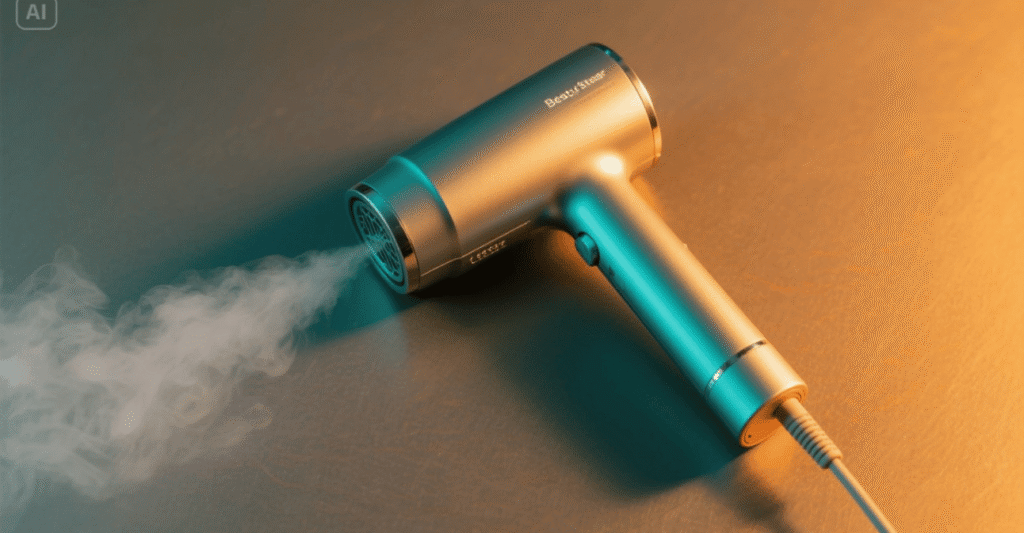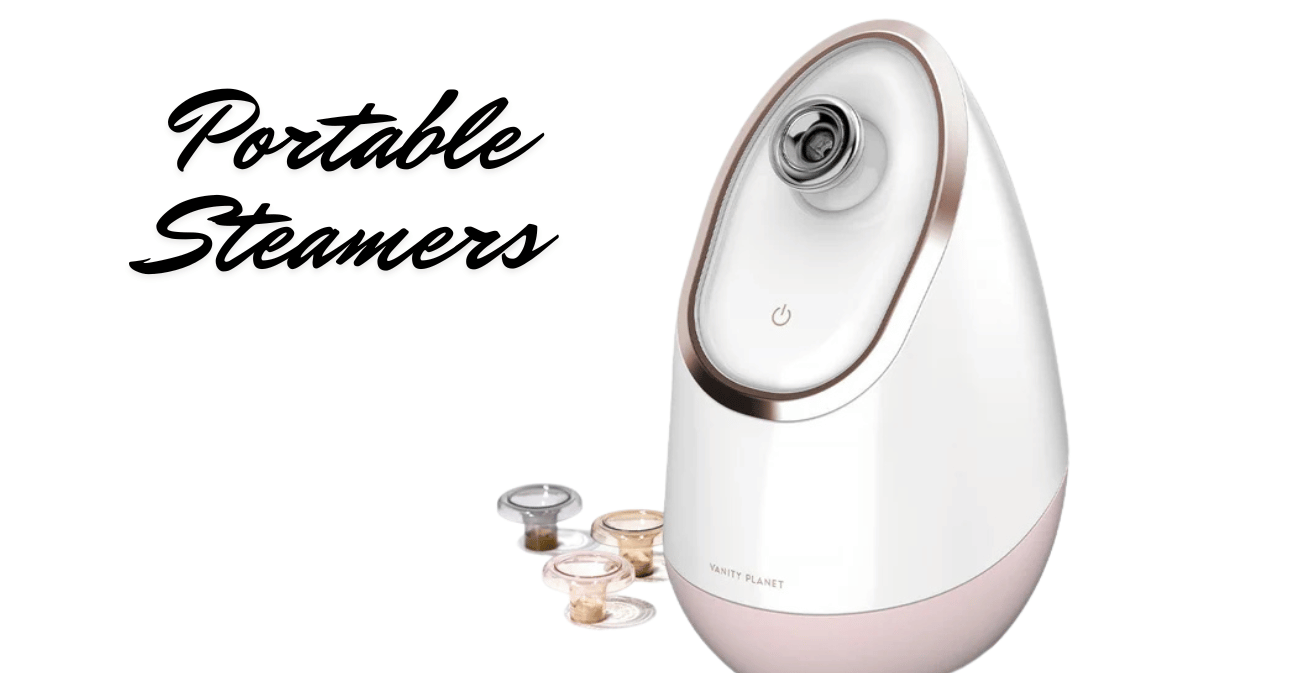
A portable steamer is a small handheld appliance that turns water into steam to relax creases in hanging clothes, with no ironing board needed. It is best for quick touch-ups, delicate fabrics such as silk, chiffon and wool, and travel. When choosing one, the specs that matter most are steam output, heat-up time, tank size, weight and, if you travel long-haul, dual voltage.
A steamer will not give you the sharp creases an iron does, so many households keep both. This guide explains how portable steamers work, which features to compare, how to use one properly, how to look after it and which fabrics to leave alone.
| Question | Short answer |
|---|---|
| Best for | Shirts, dresses, knitwear, suits between cleans, travel |
| Not ideal for | Crisp trouser creases, heavily creased linen, very thick cotton |
| Typical heat-up | From under 30 seconds to around a minute on many models |
| Key spec | Steam output, often shown in grams per minute |
| Travel essential | Dual voltage if you use it outside the UK and Europe |
How a Portable Steamer Works
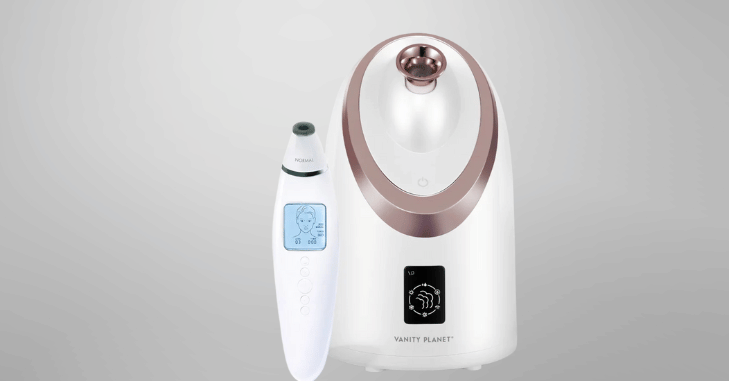
Water from a small tank is pumped onto a heating element, turning it into steam that leaves through holes in the plate. When steam hits fabric, the heat and moisture loosen the bonds between fibres, and gravity pulls the garment straight as it hangs. That is why steamers work best on clothes on a hanger rather than flat on a surface.
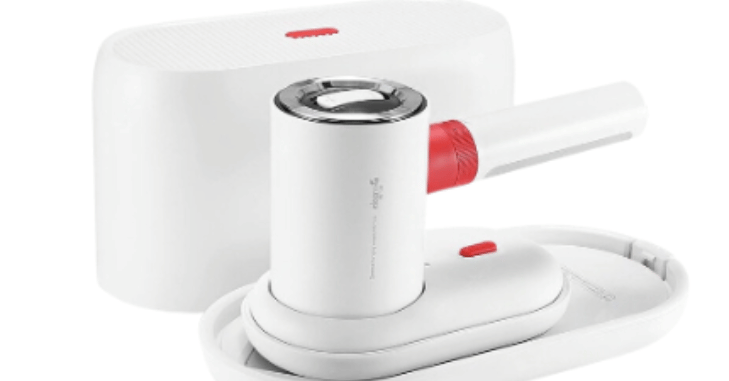
Some models have a heated plate that you can press gently against the fabric, which helps with stubborn creases; others produce steam only and should be held just off the surface. The heated-plate type is closer to an iron in results, while steam-only models are gentler and better suited to very fine fabrics.
Benefits of a Portable Steamer
- Speed: no board to set up; you can refresh a shirt in a couple of minutes.
- Gentle on delicates: no direct pressure means less risk of shine or scorch marks on silk, satin, wool and synthetics.
- Awkward garments: pleats, ruffles, sequins (with care) and structured jackets are easier to steam than iron.
- Beyond clothes: curtains can be steamed where they hang, and upholstery and bedding can be freshened.
- Freshening: steam can help reduce odours, for example in a jacket after a smoky evening, though it is not a substitute for washing or dry cleaning.
- Travel: small enough for a suitcase, and useful for creases from packing.
Key Features to Compare
| Feature | Why it matters | What to look for |
|---|---|---|
| Steam output (g/min) | More steam relaxes creases faster, especially on cotton | Compare figures between models; higher is generally better |
| Wattage | Affects heat-up and steam consistency | Handhelds commonly range from roughly 1,000W to 1,800W |
| Tank size | Determines steaming time before refilling | Small tanks suit travel; bigger tanks suit weekly use |
| Weight | Arm fatigue on longer sessions | Check weight with a full tank, not empty |
| Heated plate | Helps with firmer fabrics | A plate you can press gently gives more iron-like results |
| Voltage | UK mains is 230V; the US and some other countries use lower voltages | Dual voltage for long-haul trips |
| Safety | Reduces accidents and spitting | Auto shut-off, anti-drip, stable base, heat-resistant cap |
| Attachments | Extra jobs | Fabric brush for thick coats, crease clip, lint brush |
How to read the spec sheet
Manufacturers present figures differently, so compare like with like. Steam output is the most useful single number, but check whether the figure is continuous steam or a short “boost”. Tank capacity matters less than how long that tank lasts in practice, which some brands list as minutes of steam. Cable length is easy to overlook: a short cable forces you to steam next to a socket, which is awkward on a door hook.
Types of Portable Steamer
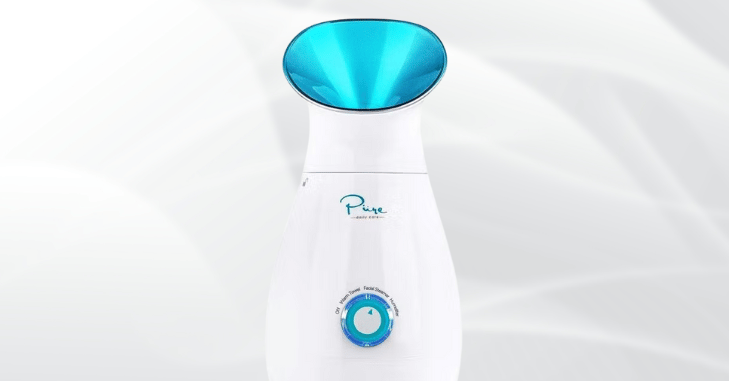
Compact travel steamers
The smallest and lightest option, often with a foldable handle and a small tank. They are ideal for hotel rooms and weekend bags but can struggle with heavy fabrics. Check whether the model is dual voltage and remember you will need the right plug adaptor abroad.
Full-size handheld steamers
Larger tanks and more power, designed for regular home use. Many have a heated metal or ceramic plate and some can be used horizontally as an iron alternative. This is the category most major UK appliance brands focus on, including Philips, Tefal, Russell Hobbs and Morphy Richards.
Upright garment steamers
Not really portable, but worth knowing about: a floor-standing unit with a large tank, hose and pole. They give the most continuous steam and suit households that steam a lot, or anyone who wants to replace an iron for most jobs.
Portable Steamer vs Iron
| Portable steamer | Iron | |
|---|---|---|
| Sharp creases | Poor | Excellent |
| Delicate fabrics | Excellent | Risk of shine or scorching |
| Set-up time | Very quick | Board needed |
| Heavily creased cotton and linen | Slow | Faster and flatter |
| Curtains, jackets, pleats | Easy | Awkward |
| Travel | Good | Bulky |
If you mostly wear knitwear, dresses and casual shirts, a good steamer may be all you need. If you want pressed shirts and trousers for work, keep an iron and use the steamer for touch-ups. Drying clothes carefully reduces creasing in the first place; our guide to heat pump tumble dryers covers gentler drying that leaves fewer wrinkles.
How to Use a Portable Steamer: Step by Step
- Check the care label. Avoid steaming items marked “do not steam” and be careful with suede, leather, velvet and some synthetics.
- Fill the tank. Use the water your manual recommends. In hard-water areas, which cover much of southern and eastern England, limescale builds up quickly, so some manufacturers suggest mixing in distilled or filtered water.
- Hang the garment. Use a sturdy hanger on a door hook or rail, away from walls that might get damp.
- Test first. Steam the first burst into a towel or sink to clear any water that might spit.
- Work top to bottom. Hold the head upright and move slowly downward. With your free hand, gently pull the hem taut, keeping fingers away from the steam.
- Steam the inside for delicates. Steaming from the reverse side reduces the risk of water marks on silk and satin.
- Let it dry. Leave the garment hanging for a few minutes before wearing so the fibres set.
Fabric-by-fabric tips
| Fabric | Approach |
|---|---|
| Cotton shirts | Slow passes, pull the fabric taut, steam collar and cuffs from the inside |
| Linen | Expect a relaxed finish; slightly damp linen steams more easily |
| Silk and satin | Steam from the reverse, keep the head moving and slightly away |
| Wool and knitwear | Hold just off the surface; steam helps lift flattened fibres |
| Polyester and blends | Usually respond quickly; use a lower setting if available |
| Suits and blazers | Steam the body and sleeves, then let them hang before wearing |
If you are unsure, test on a hidden area such as an inside seam first.
Care and Maintenance
- Empty the tank after each use so water does not stagnate.
- Descale regularly following the manufacturer’s instructions; some models have a dedicated descaling function.
- Wipe the plate when cool to remove residue that could mark clothes.
- Let the steamer cool fully before packing it, and pack it with the tank empty.
Safety Tips
Steam can burn quickly. Never steam clothes while you are wearing them, keep the head pointing away from your hands and face, and store the steamer out of reach of children while it cools. Stand it on its base rather than laying it on fabric. If your steamer leaks, spits persistently or the cable is damaged, stop using it and contact the manufacturer.
Common Mistakes to Avoid
- Steaming too fast: sweeping quickly over a garment barely warms the fibres. Slow, overlapping passes work better.
- Steaming flat on a bed: without tension, creases simply relax and return. Hang the item or pull it taut.
- Tilting the head too far: many handhelds spit water when held horizontally. Keep the steamer as upright as the design requires.
- Overfilling: filling above the maximum line can cause leaks and wet patches.
- Ignoring limescale: white flakes on dark clothes are usually a sign the steamer needs descaling.
How Much Should You Spend?
Basic compact steamers from supermarket and own-brand ranges are inexpensive and fine for occasional touch-ups. Mid-range models from established appliance brands usually add higher steam output, a heated plate, better anti-drip design and longer warranties, and they are the sweet spot for most households. Premium handhelds and upright units cost more and make sense if you steam several times a week or want to replace your iron.
Quick buying checklist
- Steam output stated clearly, ideally as continuous g/min
- Weight with a full tank that you can hold for ten minutes
- Anti-drip or anti-spit design mentioned in reviews, not just on the box
- Auto shut-off and a stable base
- Dual voltage if you travel outside Europe
- A warranty of at least one year and an easy way to descale
Travelling with a Steamer
Pack the steamer empty and let it cool completely first. Fold clothes along natural lines or roll them, and hang them in the bathroom when you arrive, since shower steam loosens light creases before you even switch the steamer on. If you are short of suitcase space, compressing bulky jumpers with vacuum storage bags can free room, though compressed items usually need a steam before wearing. Structured coats such as a trench coat also respond well to a quick steam after travel.
For more buying guides, browse our Tech category.
Bottom Line on Portable Steamers
Choose a portable steamer for speed, delicate fabrics and travel, and keep an iron if you need sharp creases. Prioritise steam output, full-tank weight, anti-drip design and a decent warranty over gimmicks, use it on hanging clothes with slow top-to-bottom passes, and descale it regularly if you live in a hard-water area.
Frequently Asked Questions
Do portable steamers really work?
Yes, for most everyday creases, especially on light and delicate fabrics. They are slower on heavily creased cotton and linen and will not create sharp creases.
Can a steamer replace an iron?
For many people, mostly. If you need crisp shirt collars or trouser creases, an iron is still better, so many households keep both.
Can I use tap water in a portable steamer?
Check your manual. Many allow tap water, but in hard-water areas mixing in distilled or filtered water and descaling regularly helps prevent limescale.
Which fabrics should not be steamed?
Take care with suede, leather, velvet, waxed fabrics and some plastics or coated materials. Always check the care label and test on a hidden area first.
Will my UK steamer work abroad?
It will work across most of Europe with a plug adaptor. For countries with lower mains voltage, such as the US, you need a dual-voltage model.
Why is my steamer spitting water?
Spitting usually comes from tilting the head too far, not letting it heat fully, overfilling or limescale build-up. Fire the first burst into a towel and descale if it keeps happening.