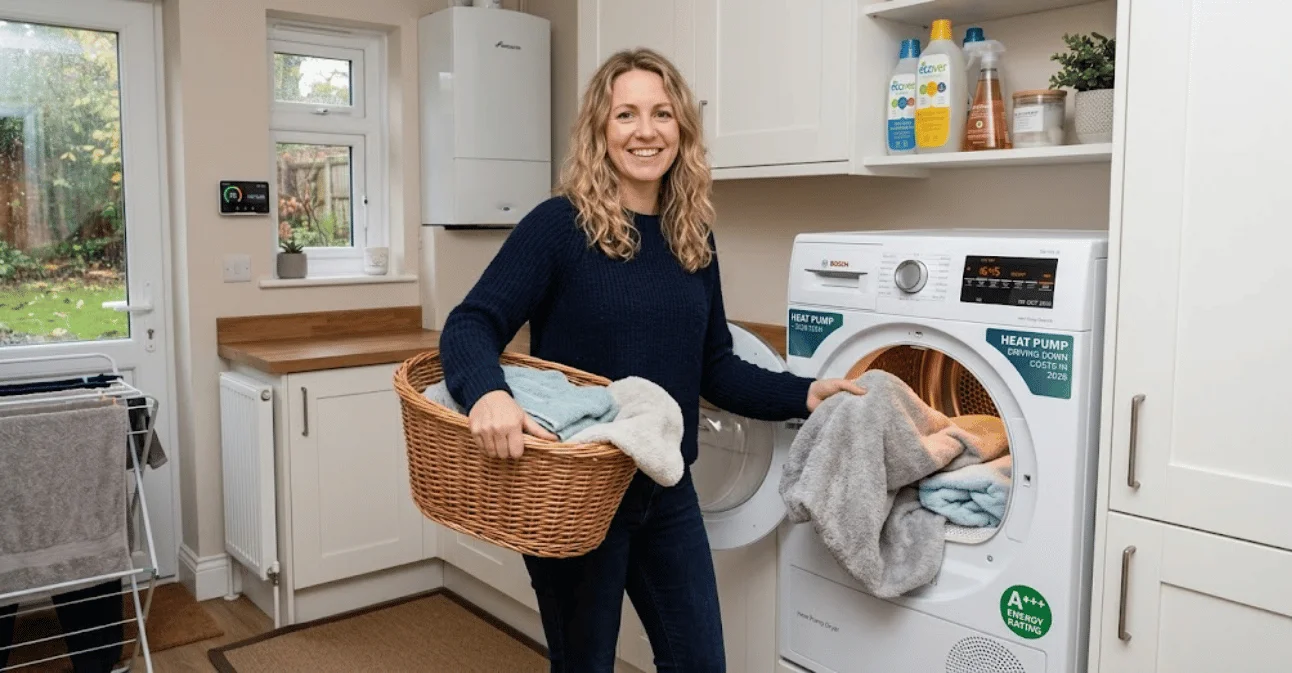
Buying a heat pump tumble dryer is mainly a choice between paying more upfront and spending less on electricity later. These machines also dry at lower temperatures, which can be kinder to clothes. The trade-off is that drying cycles tend to take longer than those of traditional models.
| What to compare | What UK buyers should know |
|---|---|
| Typical purchase price | About £661 on average, with models starting at around £279 |
| Average annual running cost | About £54 in Which? testing |
| Installation | No external vent needed |
| Water removal | Empty the tank or use an optional drain connection |
| Main advantage | Much lower electricity use |
| Main drawback | Higher upfront price and longer cycles |
| Best suited to | Households that use a dryer regularly |
Short answer: For households that dry laundry regularly, the lower electricity use can make the higher purchase price worthwhile over several years. A heat-pump model also needs no external vent and uses gentler drying temperatures. If you rarely use a dryer, the savings may take too long to offset the extra upfront cost.
How Heat-Pump Drying Works
A conventional dryer heats air, passes it through wet laundry, then deals with the warm, damp air afterwards. A heat-pump machine works differently. It captures that heat and sends it back through the drum instead of continually generating more hot air.
Reusing heat cuts electricity consumption. It also allows the machine to dry at lower temperatures. That can reduce heat stress on fabrics, although the process usually takes longer. Bosch and other manufacturers describe the system as a closed-loop approach that recycles warm air rather than venting it outside.
You don’t need to make a hole through an outside wall. Moisture collects in a container, or you can connect a compatible model to a drain. That flexibility makes this type of dryer useful in flats and homes without a suitable external vent.
Heat Pump Tumble Dryer vs Condenser and Vented Dryers
The purchase price alone makes heat-pump models look expensive. Running costs change the comparison.
Which? reports the following current averages from its dryer testing and market data.
| Dryer type | Average purchase price | Average annual running cost | External vent? | Main trade-off |
| Heat pump | £661 | £54 | No | Costs more to buy and dries more slowly |
| Condenser | £307 | £138 | No | Cheaper upfront but uses much more electricity |
| Vented | £261 | £139 | Yes | Lowest average purchase price but needs a vent route |
Heat pump: pros and cons
Pros
- Lowest average running cost of the three types.
- No external vent required.
- Lower drying temperatures can be gentler on fabrics.
- Optional direct drainage is available on many models.
Cons
- Higher purchase price.
- Longer drying cycles.
- Filters and other accessible components need regular cleaning.
Condenser: pros and cons
Pros
- Much lower average purchase price.
- No external wall vent needed.
- Wide choice of models and capacities.
Cons
- Higher electricity costs.
- Less attractive for frequent use when energy bills matter.
Vented: pros and cons
Pros
- Lowest average purchase cost in the comparison.
- Straightforward technology.
- Can suit homes that already have a suitable vent route.
Cons
- Requires a hose or external vent.
- Uses considerably more electricity than a heat-pump model.
- Offers more limited placement options.
Verdict: If you use a dryer regularly and expect to keep it for several years, heat-pump technology is the stronger long-term choice. If you use a dryer only occasionally and the purchase budget is most important, a cheaper alternative can still make financial sense.
How Much Does One Cost to Run in 2026?
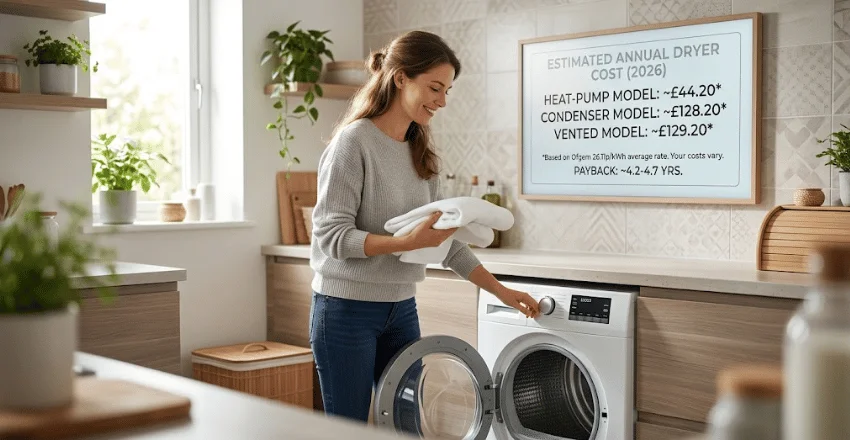
As of 23 August 2026, Ofgem’s average electricity unit rate for direct-debit customers in England, Scotland, and Wales is 26.11p per kWh for the price-cap period ending 30 September 2026. Your actual tariff may differ.
You can estimate a model’s cost using its published electricity consumption:
Annual kWh × your electricity unit rate = estimated annual electricity cost.
For example, a dryer using 200 kWh per year would cost about £52.22 at 26.11p/kWh. The standing charge isn’t included because you pay it whether the appliance is running or not.
The averages reported by Which? also provide a useful basis for a simple payback estimate. A heat-pump model costs about £354 more than the average condenser model but saves around £84 per year in electricity. That suggests a basic payback period of roughly 4.2 years.
Compared with the average vented model, the purchase premium is about £400, while the annual saving is about £85. That works out at roughly 4.7 years. These figures are estimates, not guarantees, because prices, usage, and electricity tariffs vary.
What to Look for Before You Buy
Don’t choose based on the headline price alone. Compare the details that affect daily use.
- Capacity: Match the drum to your usual wash loads. Which? says the smallest current heat-pump machines are generally around 7kg, while many mainstream options are larger.
- Electricity consumption: Check the stated kWh figure to calculate running costs using your own tariff.
- Sensor drying: Moisture sensors can stop the cycle when clothes reach the selected dryness level.
- Drain option: Decide whether to empty the tank or connect the appliance to a suitable drain.
- Dimensions: Measure the width and depth, and check the door clearance and surrounding ventilation space before ordering.
- Noise: Check the machine’s rated noise level if it will be near a kitchen, bedroom, or living area.
- Programme choice: Wool, delicates, bedding, and quick programmes may matter more than app controls.
Dryer labelling in Great Britain is also going through regulatory changes, so don’t judge two machines by a letter grade alone. GOV.UK guidance indicates that different compliant label formats can currently be found on the market. The stated energy-consumption figure gives you a clearer basis for comparison.
If you’re putting together a more practical laundry area, Typify’s guide to choosing the right ironing board covers another everyday purchase where dimensions and storage matter.
Installation and Maintenance Matter
You don’t need plumbing in the same way you do for a washing machine. The dryer can collect condensed water in its built-in tank. Models with a drain option can send that water away automatically when installed correctly.
Always follow the manufacturer’s clearance and temperature requirements. An unheated garage or outbuilding isn’t automatically suitable for every model. Heat-pump systems depend on ambient conditions, so check the permitted operating temperature range before choosing a location.
Clean the lint filters as directed in the manual. Some machines also require periodic cleaning of a secondary filter or the heat-exchanger area. Blocked airflow can lengthen cycles and reduce efficiency.
If you use a drain hose, secure it exactly as instructed. A loose or poorly routed connection can cause a leak. Typify’s guide to the first steps after household water damage is useful if an appliance leak ever affects the room.
Who Should Buy One?
A heat-pump dryer makes the most sense in these situations.
- You dry several loads as part of your normal household routine.
- You expect to keep the appliance for years.
- You want to reduce electricity consumption.
- You don’t have a practical external vent.
- You value lower-temperature fabric care.
Consider a cheaper condenser or vented alternative if you use the machine infrequently and need to minimise the upfront purchase price. A vented model can also make sense where a suitable vent is already installed.
The same purchasing logic applies to other household upgrades: compare the upfront cost with the savings and convenience you’ll get over time. Typify’s Home Improvement guides cover more household buying decisions, while its induction-hob cookware guide can help if you’re updating an energy-conscious kitchen.
The Verdict
For a UK household that relies on machine drying, the extra upfront cost is usually easier to justify because of the lower long-term electricity use. The 2026 averages from Which? suggest that the purchase premium can be recovered in roughly 4 to 5 years, compared with typical condenser or vented machines.
Before ordering, shortlist three models and compare their capacity, kWh consumption, dimensions, noise levels, drainage options, and warranties. Calculate the electricity cost using your own tariff rather than relying on marketing claims. That gives you a much clearer idea of which machine offers the best value for your home.
Frequently Asked Questions
For regular dryer users, it often is. Current averages from Which? show annual running costs of about £54 for heat-pump machines, compared with £138 for condenser dryers and £139 for vented ones. The higher purchase price can therefore be recovered gradually through lower electricity use.
No. It can collect water in an internal container that you empty manually. Many models also allow you to connect a hose to a suitable drain, removing the need to empty the tank.
They use lower drying temperatures and recycle heat rather than relying on stronger, continuous heating. That cuts electricity use but can extend the cycle.
Possibly, but check the model’s manual first. Garages can become colder than the manufacturer’s permitted operating range. Dimensions, ventilation clearances, and room temperature should all be checked before installation.