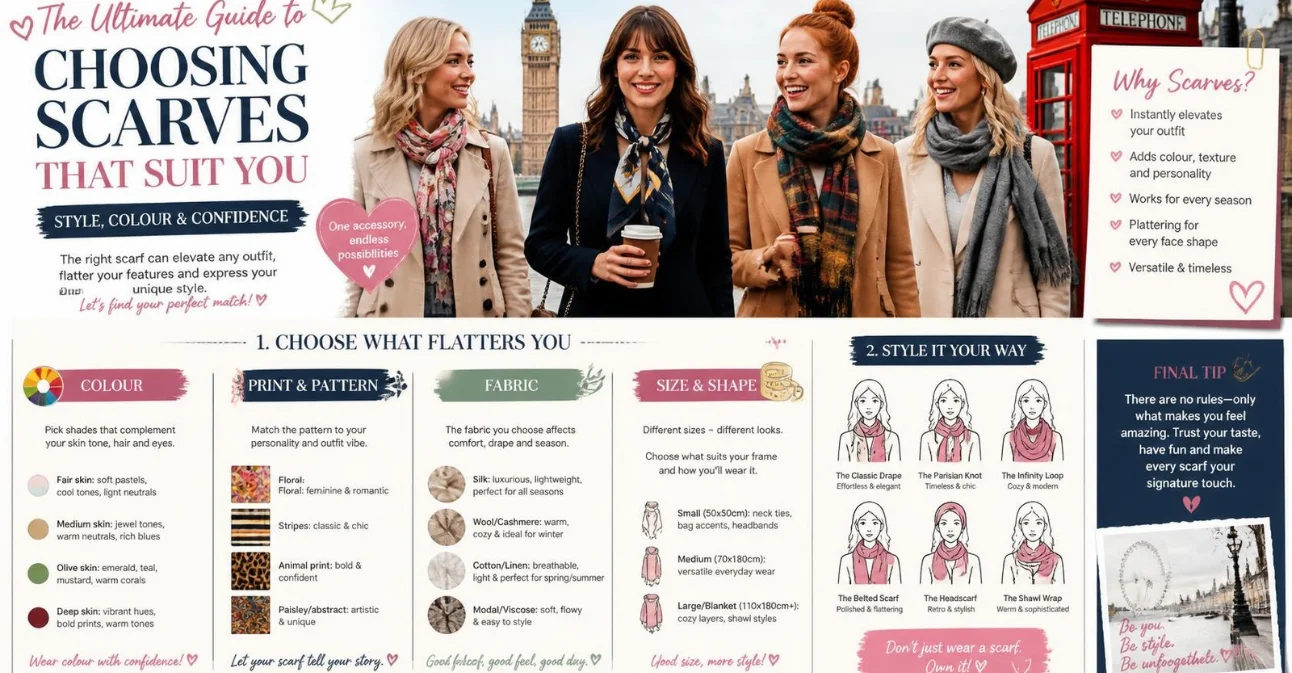
Scarves for women can provide warmth, colour and an easy way to change an outfit. The right choice depends on material, size, season and how you expect to wear it. UK weather makes versatility especially useful because conditions can change quickly. Elsewhere on the site: Studio 2nd Seat Fabric.
A lightweight square works differently from a thick winter wrap. Silk and satin suit decorative styling, while wool-rich designs usually offer more insulation. Before buying, decide whether warmth, styling flexibility or both matter most.
| Buying question | Practical answer |
|---|---|
| Best for cold weather | Wool, cashmere or warm blended fibres |
| Best for mild weather | Cotton, viscose or lightweight woven fabrics |
| Best decorative option | Silk or satin square |
| Most versatile shape | Medium or large rectangular design |
| Easy colours | Black, cream, camel, navy and grey |
| Useful statement choices | Checks, florals, stripes and brighter colours |
| UK price range | Budget options start near £10, while premium fibres can exceed £100 |
| Key buying checks | Fibre content, dimensions, care label, softness and intended use |
Quick answer: Choose a scarf according to the weather, your wardrobe and the way you plan to wear it. Wool-rich options suit colder British months, while silk, cotton and lighter fabrics work well for styling or milder days. Check dimensions and fibre content before buying because photographs can hide scale and thickness.
What Should You Look for When Buying Scarves for Women?

Start with function rather than colour or print. Scarves for women for winter commuters need more warmth than someone choosing an accessory for indoor outfits. This simple decision quickly narrows your options.
Next, check the fibre label and exact measurements. Retail photographs can make a small square appear larger than it is. Measurements also show whether a design can wrap twice, cover your shoulders or sit neatly at the neck.
Finally, consider your existing coats, knitwear and tops. A useful accessory should work with several pieces you already own. That approach usually provides more wear than buying around one specific outfit.
Which Scarf Material Is Best?
There is no single material that suits every season. Each fibre changes warmth, drape, texture and care requirements. Your preferred feel should guide the final choice.
Wool
Wool is a strong option for autumn and winter because it can provide reliable insulation. Thicker woven versions work well over coats and jumpers. Softer finishes may feel more comfortable if your neck is sensitive.
Always check the care label before washing wool. Some products need hand washing or specialist cleaning. Blended designs may offer easier care, depending on their fibre mix.
Cashmere
Cashmere is valued for softness and warmth without excessive bulk. It suits people who prefer a lighter winter layer around the neck. Premium cashmere usually costs more than standard knitted alternatives.
Check the full composition before paying a premium price. A product described as cashmere may contain a blend rather than pure fibre. The label gives you a clearer basis for comparison.
Silk and Satin
Silk squares are better suited to decorative styling than heavy winter insulation. They can sit at the neck, in the hair or around a handbag handle. Current fashion coverage also continues to feature small silk designs as outfit accents.
Satin can create a similar polished appearance at different price points. Fibre composition varies because satin describes a weave rather than one specific fibre. Check the product label if material matters to you.
Cotton, Viscose and Lightweight Blends
Cotton can feel breathable and familiar during milder weather. Viscose often produces a softer, flowing drape that suits larger wraps. Lightweight blends can also provide practical everyday options at accessible prices.
These materials work well during spring, cool summer evenings and early autumn. They can also fit more easily inside a handbag than thick knitted designs. Care instructions still vary, so check them before washing.
How Different Styles Compare
A scarf’s shape affects how easily you can style it. Square, rectangular and triangle designs create different proportions around the neck. Choosing the right form can matter as much as choosing the fibre.
| Style | Best use | Main advantage | Possible drawback |
|---|---|---|---|
| Large rectangle | Winter layering | Warm and easy to wrap | Can feel bulky indoors |
| Silk square | Smart outfits and accessories | Many styling options | Limited winter warmth |
| Skinny design | Decorative neck styling | Lightweight and neat | Little insulation |
| Triangle shape | Casual outfits | Easy front drape | Less flexible than a rectangle |
| Oversized wrap | Travel and cold weather | Can cover shoulders | Takes more storage space |
| Lightweight woven style | Transitional weather | Easy everyday layer | Less useful in severe cold |
A medium rectangular piece is usually the safest choice for versatility. It can hang loose, loop once or sit inside a coat. A larger version offers greater warmth but creates more volume.
Square designs make more sense when styling is the priority. Fold one diagonally for a neckerchief shape or create a narrow band. They can also add colour without covering much of your outfit.
How Much Should You Pay in the UK?
Current UK retail listings show a wide price spread. H&M examples begin around £9.99, while ARKET lists options across mid-range and premium price points. Designer and luxury-fibre products can cost considerably more.
Price alone does not tell you whether a purchase is suitable. Fibre composition, dimensions and finishing details are more useful comparison points. A £20 accessory worn weekly may offer better value than an expensive piece left unused.
For a practical budget, first decide what job the item needs to perform. Set a higher allowance for premium natural fibres if softness and warmth matter. Spend less when you mainly want seasonal colour or an occasional styling accessory.
How to Choose a Colour You Will Wear Often
Neutral shades are easier to combine with several coats and jackets. Black, camel, navy, cream and grey can fit into many UK wardrobes. They also make sense when your outerwear already contains strong patterns.
A bright colour works well when most of your clothing is neutral. Red, green, cobalt or pink can become the main visual accent. Keep the rest of the outfit simpler when you want the colour to stand out.
Patterns need slightly more planning. Checks suit classic winter dressing, while florals and paisley often work well on lighter fabrics. Look at the colours inside the pattern and match one to something you already own.
How to Style a Scarf Without Overcomplicating Your Outfit
For everyday winter dressing, place a long piece around your neck and loop it once. Let both ends hang naturally over the front of your coat. This method gives warmth without requiring a complicated knot.
You can also wear a square as a neat neckerchief. Fold it diagonally, roll it to the width you want and tie it loosely. This works particularly well with simple shirts, crew-neck knitwear and structured jackets.
For smart-casual outfits, combine a decorative neck accessory with tailoring. Typify’s bandeau top guide shows how structured layers can balance more open necklines. A scarf can provide extra colour or coverage within the same styling approach.
For warmer holidays, treat lightweight fabric as part of a wider travel wardrobe. Typify’s sarong guide explains how adaptable fabrics can serve several styling purposes. That same planning principle helps you pack fewer single-use accessories.
Matching a Scarf to Your Coat
A thick winter coat can usually handle more volume around the neck. Choose enough length to wrap comfortably without creating pressure. Very bulky designs may feel cramped with high collars.
Trench coats pair well with lighter woven pieces and silk squares. The cleaner coat shape leaves room for a smaller decorative detail. Typify’s trench coat guide provides more ideas for balancing colour and accessories with classic outerwear.
With a blazer, keep the material lighter unless temperatures are low. A silk square, fine knit or narrow design preserves the jacket’s shape. Large blanket styles can hide the tailored lines that make a blazer look sharp.
Common Buying Mistakes to Avoid
Buying from photographs alone is one of the easiest mistakes. Always check dimensions because scale changes dramatically between products. A compact square cannot create the same wraps as a long rectangular piece.
Ignoring fibre content creates another problem. Two products can look similar but feel different against the skin. Fibre information also helps you judge warmth, washing needs and price.
Avoid choosing a difficult colour simply because it looks attractive online. Compare it with your most frequently worn coat before ordering. If the colours clash, the item may stay in your wardrobe.
Care requirements matter as well. Delicate materials need more attention than many synthetic blends. Choose maintenance that fits your normal routine rather than relying on occasional specialist cleaning.
A Simple Buying Checklist
Before placing an order, check the following.
- The full fibre composition.
- Exact length and width.
- Washing or cleaning instructions.
- Whether the fabric may irritate your skin.
- How many coats or outfits it matches.
- Whether you need warmth or decoration.
- Whether the price reflects the material.
- The retailer’s current delivery and returns terms.
This checklist makes online comparisons more useful. It also reduces the chance of buying something that only looks suitable in styled photographs. A practical purchase should work after the first wear, not only on the product page.
Which Style Should You Choose?
Choose wool or a warm blend if cold-weather comfort comes first. Pick silk, satin or another lightweight fabric when your main goal is adding colour or polish. Select a medium rectangle if you want the easiest balance between styling and function.
Women who already own neutral outerwear can experiment with print or brighter colour. Those with patterned coats may get more use from a plain option. Your wardrobe should determine the choice rather than a short-lived trend.
For most UK wardrobes, one warm winter piece and one lightweight decorative option cover many situations. You can add other shapes later if you use them regularly. This approach keeps the collection useful instead of repetitive.
Frequently Asked Questions
What are the best scarves for women in the UK?
The best option depends on season, material and intended use. Wool-rich designs suit colder months, while silk, cotton and lightweight fabrics offer more styling flexibility. Check dimensions and fibre content before comparing colours.
What scarf material is warmest?
Wool and cashmere are common choices for cold-weather insulation. Thickness, weave and the full fibre blend also affect how warm a product feels. A loosely woven design may behave differently from a dense one.
Are silk designs only for summer?
No, they can work throughout the year as decorative accessories. During winter, wear one indoors or beneath a coat rather than relying on it for heavy insulation. They also work on bags or in the hair.
What colour goes with most outfits?
Black, cream, camel, navy and grey are dependable choices. They combine easily with common coat colours and everyday knitwear. A brighter shade may be more useful if your wardrobe is already mostly neutral.
How large should a scarf be?
Size depends on how you want to wear it. A long rectangle gives more wrapping options, while a small square suits decorative knots. Always check centimetre measurements instead of relying on photographs.
Is an expensive scarf worth buying?
It can be if the material, comfort and expected use justify the price. Premium fibres may cost more, but high price does not guarantee greater usefulness. Compare composition, finish and how often you expect to wear it.
Make Your Next Choice Work Harder
A useful scarf should solve a practical need and suit clothing you already own. Start with season, material and dimensions before deciding on colour. That order makes comparisons easier and reduces impulse purchases.
For more UK styling ideas, explore Typify’s fashion guides before planning your next outfit. Combine accessories with pieces you already wear regularly. A well-chosen addition can refresh several outfits without requiring a complete wardrobe change.