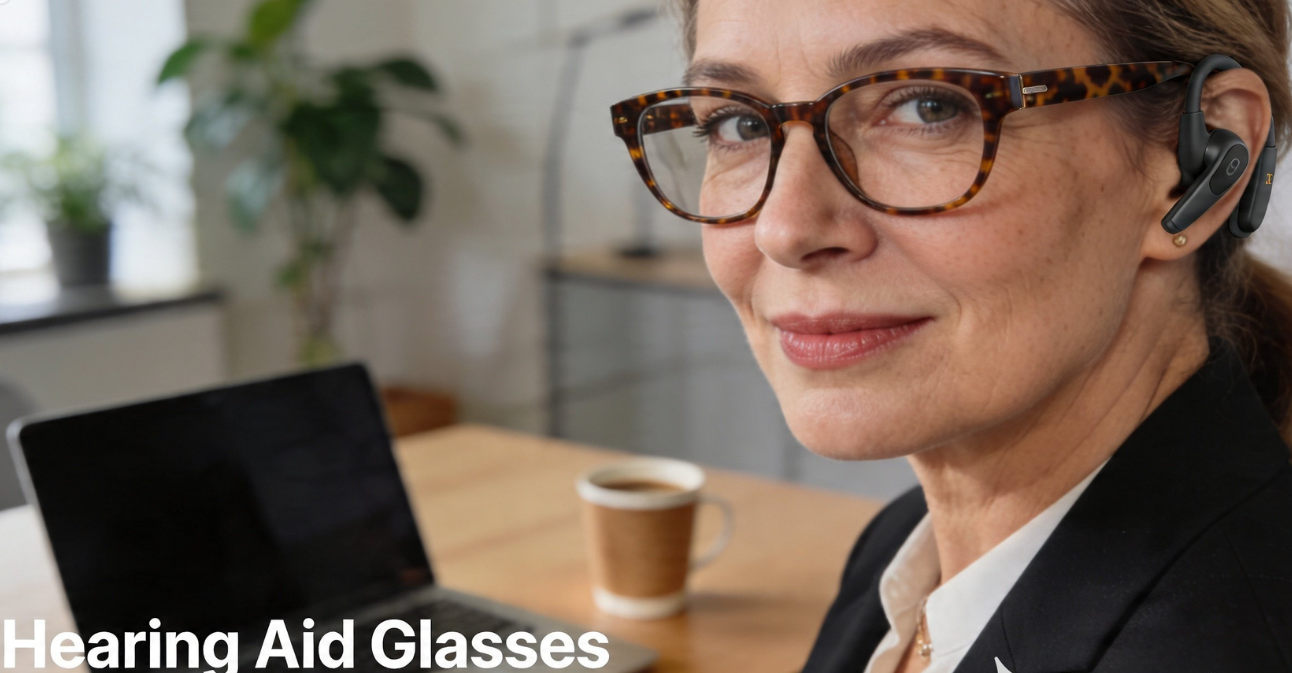
Hearing Aid Glasses are an innovative solution that seamlessly combines vision correction and hearing support into a single, user-friendly device. Designed for individuals seeking a discreet, convenient alternative to traditional hearing aids, these smart glasses integrate advanced audio technology directly into the frame, eliminating the need for separate hearing devices.
From understanding how these glasses work through air and bone conduction to exploring their key features, benefits, types, and limitations, this guide provides a complete overview of everything you need to know. For a closer look, see Everything You Need to Know About Virtual Assistant Jobs UK.
As technology continues to evolve, these glasses are becoming an increasingly popular choice for people with mild to moderate hearing loss who value comfort, functionality, and modern design in their everyday lives.
| Category | Details |
| Product Name | Hearing Aid Glasses |
| Definition | Eyewear integrated with hearing assistance technology |
| How It Works | Uses air conduction or bone conduction to transmit sound |
| Main Technologies | Air Conduction, Bone Conduction |
| Key Features | Built-in microphones, noise reduction, Bluetooth, rechargeable batteries, and app controls |
| Design | Lightweight, comfortable, discreet, stylish frames |
| Benefits | Dual functionality, improved comfort, stability, and safety awareness |
| Types | Bone conduction, air conduction, smart glasses, prescription & non-prescription |
| Best For | Mild to moderate hearing loss, glasses users, discreet solutions |
| Comparison | More convenient but less powerful than traditional hearing aids |
| Price Range | Basic, mid-range, and premium options available |
| Maintenance | Regular cleaning, safe storage, battery care, and professional check-ups |
| Limitations | Less powerful, fewer customizations, not ideal for severe hearing loss |
| Future Scope | AI integration, smart features, improved performance |
What Are Hearing Aid Glasses?

Hearing aid glasses are specially designed eyewear that integrate hearing assistance technology directly into the frame, with sound-transmission components built into the arms (temples) rather than placed in or behind the ear, as with traditional hearing aids.
These devices are especially useful for individuals who already wear prescription glasses, prefer a more discreet hearing solution, experience mild to moderate hearing loss, or want a compact, multifunctional assistive device.
By combining vision correction and hearing support in a single product, these glasses offer a convenient, space-saving, and user-friendly alternative to conventional hearing aids.
How Hearing Aid Glasses Work?
Hearing aid glasses function by capturing sound from the environment, processing it, and delivering it to the user’s ears through specialized technology. There are two main mechanisms used:
- Air Conduction Technology: This method works similarly to traditional hearing aids. Small microphones embedded in the glasses pick up sound, amplify it, and deliver it through tiny speakers positioned near the ear canal.
- Bone Conduction Technology: Bone conduction is a more advanced and increasingly popular approach. Instead of sending sound through the air into the ear canal, vibrations are transmitted through the bones of the skull directly to the inner ear. Bone conduction allows users to hear clearly while keeping their ears open to surrounding sounds, enhancing situational awareness.
Key Features
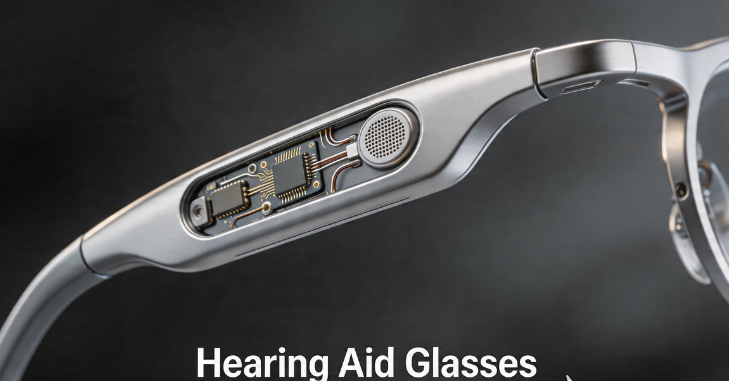
Modern hearing aids come equipped with a variety of features designed to improve user experience and sound quality.
Built-in Microphones
These capture environmental sounds and speech from multiple directions, allowing users to hear conversations more clearly.
Noise Reduction Technology
Advanced algorithms filter out background noise, making it easier to focus on important sounds, such as speech.
Directional Sound Processing
This feature helps prioritize sounds coming from a specific direction, such as someone speaking in front of you.
Bluetooth Connectivity
Many models allow connection to smartphones, tablets, or televisions. Users can stream calls, music, or media directly through their glasses.
Rechargeable Batteries
Most modern hearing aids come with built-in rechargeable batteries, eliminating the need for frequent battery replacements.
Lightweight and Comfortable Design
Manufacturers focus on ergonomic designs to ensure the glasses remain comfortable for all-day wear.
Prescription Lens Compatibility
Users can customize the glasses with prescription lenses, making them suitable for vision correction.
Touch or App Controls
Some devices allow users to adjust volume, switch modes, or manage settings through touch controls or mobile apps.
Benefits
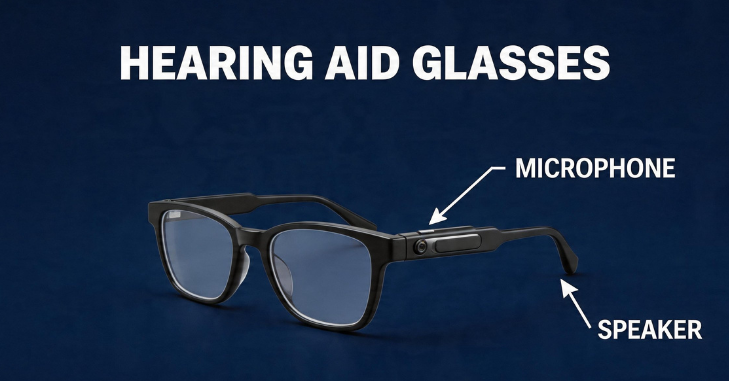
Hearing aid glasses offer several advantages that make them an appealing option for many users, including a discreet appearance, as the hearing technology is built into the frame, making them less noticeable than traditional hearing aids and helping reduce stigma while boosting confidence.
Their dual functionality combines vision and hearing support in a single device, simplifying daily routines and reducing the need for multiple accessories. They also provide improved comfort, especially for individuals who find in-ear or behind-the-ear hearing aids irritating, and better stability, since they stay securely in place and are less likely to be lost.
Additionally, bone conduction models are suitable for certain hearing conditions, particularly conductive hearing loss, and enhance safety by keeping the ears open, allowing users to remain aware of important environmental sounds, such as traffic or alarms.
Types
Hearing glasses come in different types based on their technology and design.
Bone Conduction Glasses
These transmit sound through vibrations in the skull. They are ideal for users with ear canal issues or those who prefer open-ear listening.
Air Conduction Glasses
These function like traditional hearing aids but are built into the glasses frame. They are suitable for general hearing loss cases.
Smart Hearing Glasses
These advanced models come equipped with a range of smart features that enhance both convenience and functionality, including Bluetooth streaming for seamless connection to smartphones and other devices, voice assistant integration for hands-free control and accessibility.
Real-time audio adjustments that automatically optimize sound based on the environment, and even fitness or activity tracking to support a more connected and health-conscious lifestyle.
Prescription Hearing Glasses
These combine corrective lenses with hearing support, making them a complete vision and hearing solution.
Non-Prescription Hearing Glasses
Designed for users who do not need vision correction but want the benefits of integrated hearing technology.
Hearing Aid Glasses vs Traditional Hearing Aids

Hearing aid glasses and traditional hearing aids differ in several important ways, particularly in design, comfort, performance, convenience, and suitability. They are generally more discreet and stylish, as the technology is integrated into the frame, whereas traditional hearing aids may be more noticeable.
In terms of comfort, glasses remove the need for devices inside or behind the ear, making them a preferable option for users who experience irritation with standard hearing aids. However, traditional hearing aids typically offer more powerful amplification and greater customization, especially for individuals with severe hearing loss.
Hearing glasses provide added convenience by combining vision and hearing support into a single device, reducing the need to manage multiple accessories. Overall, traditional hearing aids are better suited to complex or severe hearing conditions, while hearing glasses are ideal for those with mild to moderate hearing loss seeking a more integrated, subtle solution.
Cost and Price Range
The cost of hearing aids can vary widely depending on features, brand, and technology.
- Basic models: Affordable, with limited features
- Mid-range models: Better sound quality and comfort
- Premium models: Advanced features like Bluetooth, smart controls, and high-quality materials
While they may be more expensive than standard glasses, they can be cost-effective compared to purchasing separate hearing aids and eyewear.
Maintenance and Care Tips
To ensure longevity and optimal performance, it is important to properly maintain hearing glasses by cleaning them regularly with a soft cloth and avoiding exposure to moisture and extreme temperatures.
Charging the batteries as recommended, storing them in a protective case when not in use, and scheduling regular check-ups with a specialist. Proper maintenance not only extends the device’s life but also helps preserve sound quality and overall functionality.
Limitations
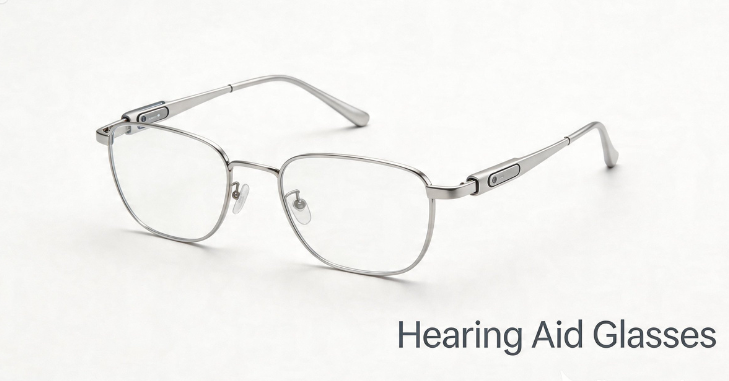
Despite their benefits, hearing aid glasses have some limitations:
- Limited power compared to advanced hearing aids
- May not suit severe hearing loss
- Fewer customization options
- Dependence on wearing glasses at all times
- Potential for a higher upfront cost
Understanding these limitations helps users make an informed decision.
Final Thoughts
Hearing aid glasses are a smart and practical innovation that bridges the gap between vision and hearing support. By combining advanced audio technology with everyday eyewear, they offer a unique solution for individuals seeking comfort, style, and functionality.
While they may not replace traditional hearing aids for everyone, they provide an excellent alternative for many users, especially those with mild to moderate hearing loss. As technology continues to improve, hearing aid glasses are set to play an increasingly important role in enhancing the quality of life and accessibility for people around the world.
Apart from that, if you want to know more about Wireless Gaming Mouse: Comprehensive Review and Expert Insights on High-Precision Performance, Ergonomic Design, and Long-Lasting Battery for Competitive Gaming then visit our Tech category.
FAQs
We also found that the volume stops working for people with more than moderate hearing loss, even though speech clarity improves significantly. These don’t work as well as regular hearing aids if you need a lot of help hearing.
Many of the best hearing aid brands offer features that mask tinnitus. Phonak, ReSound, and Starkey are some of the most well-known. We sell these brands because they work well for both hearing loss and tinnitus.
However, Meta has partnered with EssilorLuxottica to produce Ray-Ban Meta (Gen 2) smart glasses with Conversation Focus, which use AI-driven processing and a microphone array to enhance hearing.
Some patients with hearing loss and tinnitus experience improvement with hearing aids, with or without built-in ear-level maskers. Sound therapies that involve simple interventions, such as background music or noise, or specialized ear-level maskers, may be a reasonable treatment option.