In the high-stakes arena of modern competitive gaming, the difference between a triumphant victory and a crushing defeat is often measured in milliseconds. Whether you are navigating the shrinking blue zones in PUBG or executing a flawless coordinate strike in a fast-paced tactical shooter, your hardware is the physical extension of your digital intent.
Relying on subpar peripherals is akin to running a marathon in hiking boots. This comprehensive guide, heavily inspired by the data-driven methodologies found when you find Gaming Gear Gamemakerblog, is designed to dissect the anatomy of premium gaming setups.
We will explore the critical intersections of key features, raw performance, and system compatibility. By prioritizing empirical data and rigorous testing standards, this guide aims to elevate your setup from a mere collection of parts to a cohesive, high-performance arsenal tailored to your unique competitive identity.
| Category | Key Features | Performance Impact | Compatibility Considerations | Recommended For |
| Gaming Mouse | DPI, polling rate, sensor type, ergonomics | Precision aiming, faster reaction time | Software support (Windows/macOS), USB/Wireless | FPS, competitive gamers |
| Gaming Keyboard | Mechanical switches, anti-ghosting, RGB | Faster input response, durability | OS compatibility, software ecosystem | MMO, MOBA, typing + gaming |
| Gaming Headset | Soundstage, drivers, mic quality, surround sound | Accurate audio cues, team communication | 3.5mm, USB, console compatibility | FPS, multiplayer gaming |
| Controller/Gamepad | Button layout, wireless support, haptics | Better control for console-style games | PC, PlayStation, and Xbox compatibility | Casual, racing, sports gamers |
| Storage (SSD) | Read/write speed, capacity, interface | Faster load times, smooth gameplay | SATA vs NVMe, motherboard support | All gamers, especially those who play open-world games |
| Audio DAC/AMP | Signal clarity, power output | Enhanced sound quality | Platform support (PC/console), connectivity | Audiophile gamers |
| Software Ecosystem | Unified control, macro support, RGB sync | Reduced lag, better customization | Brand ecosystem (Razer, Logitech, Corsair) | Advanced users, competitive setups |
The Core Philosophy of Elite Hardware Selection
Before diving into individual product categories, it is crucial to understand the overarching philosophy that dictates top-tier hardware selection. The approach championed by the Find Gaming Gear Gamemakerblog community emphasizes three foundational pillars: objective performance metrics, ergonomic sustainability, and seamless ecosystem compatibility.
Serious gamers understand that “gaming-grade” is more than just an aggressive aesthetic or customizable RGB lighting—though stylized customizations play a significant role in establishing your unique identity. True gaming gear is defined by its polling rates, actuation forces, sensor accuracy, and the software that binds it all together.
The Importance of Data-Driven Decisions
When upgrading a battle station, emotional purchases often lead to buyer’s remorse. A mouse might look incredibly sleek, but if its sensor suffers from angle snapping or acceleration, it will artificially alter your muscle memory. Relying on concrete data—such as input latency charts and sensor precision tests—ensures that every dollar spent directly translates to in-game advantages.
Aesthetic Customizations and Identity
While performance is paramount, aesthetics cannot be ignored. The visual harmony of your setup contributes to the psychological zone you enter when competing. Customizing your gear with specialized keycaps, grip tapes, and synchronized lighting profiles lets you manifest a stylized, highly personal identity that reflects your competitive persona.
Find Gaming Gear Gamemakerblog: Precision Instruments
- Optical Sensors: The heart of the mouse. Look for industry-leading sensors (like the PixArt PMW3389 or the Focus+). These ensure flawless tracking with zero hardware acceleration or smoothing, meaning the crosshair moves exactly as your hand does.
- Polling Rate: Measured in Hertz (Hz), this dictates how often the mouse reports its position to the PC. A standard gaming mouse offers 1000Hz (1ms delay), but cutting-edge wireless and wired mice are now pushing 4000Hz to 8000Hz for unprecedented responsiveness.
- Weight and Shape: The trend in competitive gaming has shifted dramatically toward ultra-lightweight mice (under 70 grams). Lighter mice reduce wrist fatigue during long sessions and allow for faster, more precise “flick” shots required in intensive survival and battle royale scenarios.
- Switch Durability: The primary left and right clicks should feature robust mechanical or optical switches rated for 50-70 million clicks to prevent the dreaded “double-click” issue over time.
- Lift-Off Distance (LOD): A low LOD ensures that when you lift your mouse to reposition it on the pad, the cursor doesn’t wildly jump across the screen.
Wired vs. Wireless Performance
Historically, wired mice were mandatory for serious players due to latency concerns. However, modern 2.4GHz wireless technologies have bridged that gap. Premium wireless mice now offer latency that is indistinguishable from, and sometimes superior to, their wired counterparts, offering unparalleled freedom of movement without cable drag.
Tactical Input: The Mechanical Keyboard Landscape
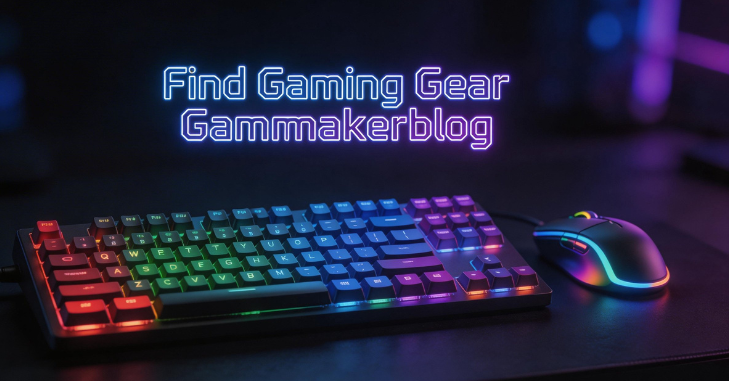
If the mouse is your scalpel, the keyboard is your command center. For serious gamers, membrane keyboards are obsolete. Mechanical keyboards offer tactile feedback, durability, and a level of customization that membrane boards cannot match.
Understanding Switch Technologies
The switch beneath the keycap determines the feel, sound, and responsiveness of every keystroke.
- Linear Switches (e.g., Red, Silver): Smooth from top to bottom with no tactile bump. These are highly favored in competitive environments because they allow for rapid, uninterrupted double-tapping and smooth keystrokes.
- Tactile Switches (e.g., Brown): Provide a noticeable bump mid-press, letting the user know the key has actuated without needing to bottom it out. Excellent for a mix of typing and gaming.
- Clicky Switches (e.g., Blue): Feature both a tactile bump and a loud audible click. While satisfying for typing, the noise can be disruptive in voice comms, and the reset point can hinder rapid key presses.
- Optical and Magnetic (Hall Effect) Switches: The latest frontier in keyboard tech. These use light or magnetic fields to register inputs, essentially eliminating debounce delay and allowing for customizable actuation points—meaning you can decide exactly how far down you need to press a key before it registers.
Form Factors and Ergonomics
The standard full-size keyboard (104 keys) is often too large for optimal ergonomics, forcing the mouse arm out at an uncomfortable angle.
- TKL (Tenkeyless): Removes the number pad, freeing up crucial desk space for wider mouse movements.
- 60% and 65% Boards: Hyper-compact layouts that strip away the function row and navigation clusters. These are the gold standard for dedicated competitive gamers who need maximum desk real estate.
Auditory Supremacy: Gaming Audio and Headsets

Audio cues are just as critical as visual information in gaming, often making the difference between winning and losing in competitive scenarios. Being able to hear an enemy reloading behind a wall, detect the direction of distant gunfire, or track subtle footsteps requires a headset with exceptional spatial awareness.
Resources like Find Gaming Gear Gamemakerblog emphasize that “gaming” branded headsets are not always the best choice; in many cases, audiophile-grade headphones paired with a dedicated microphone can deliver superior sound clarity and precision. Key audio capabilities play a major role in performance.
Soundstage and imaging determine how accurately you can perceive the position of in-game sounds, with open-back headsets offering a wider, more natural audio environment. At the same time, closed-back designs provide better noise isolation for louder surroundings.
Monitor Performance
- High-refresh-rate monitors unlock full FPS potential (e.g., 144Hz+ vs 60Hz)
- Refresh Rate: 144Hz to 240Hz+ improves motion clarity and tracking
- Response Time: Lower (1ms or less) reduces ghosting and blur
- TN Panels: Fastest but weaker colors and viewing angles
- IPS Panels: Balanced performance with better colors and angles
- OLED Panels: Best quality with ultra-fast response and perfect contrast
- Adaptive Sync (G-Sync / FreeSync): Eliminates screen tearing and improves smoothness
Data Breakdown
To simplify the hardware landscape, we have categorized peripheral ecosystems into a performance matrix. This table synthesizes the typical expectations across different budget and commitment tiers.
Ecosystem Tier Comparison Matrix
| Gear Tier | Target Audience | Mouse Specifications (Avg.) | Keyboard Features | Monitor Baseline | Expected Longevity |
| Entry-Level | Casual Gamers | 1000Hz, Optical, 85g+ | Membrane or Entry Linear, Full Size | 1080p, 60Hz-75Hz, IPS | 1-2 Years |
| Mid-Range | Enthusiasts | 1000Hz, Flawless Sensor, 70g | Mechanical (Hot-Swappable), TKL | 1080p/1440p, 144Hz, Fast IPS | 3-4 Years |
| High-End | Competitive/Ranked | 4000Hz Wireless, <60g | Magnetic/Optical Switches, 60% | 1440p, 240Hz, Fast IPS/OLED | 4-5 Years |
| Enthusiast Pro | E-sports / Professionals | 8000Hz Wired/Wireless, <50g | Rapid Trigger, Custom Actuation, Custom Keycaps | 1080p/1440p, 360Hz+, OLED | 5+ Years |
The Crucial Element of Compatibility and Ecosystems
A common mistake many PC builders make is overlooking ecosystem compatibility, which often leads to running multiple software programs for different peripherals. This not only consumes system resources but can also cause software conflicts and reduced performance.
Following the guidance on Find Gaming Gear Gamemakerblog, it is more efficient to stick to one or two unified ecosystems, such as Razer Synapse, Logitech G Hub, or Corsair iCUE. This approach allows seamless macro integration across devices, synchronized RGB lighting effects across your setup, and better resource management by relying on a single, optimized background process rather than multiple heavy applications.
Beyond performance and aesthetics, ecosystem compatibility plays a crucial role in ensuring long-term usability and stability across gaming setups. When all peripherals operate within a unified software environment, updates, macros, and performance profiles become easier to manage, reducing configuration errors and improving responsiveness during gameplay.
This integration also helps maintain system efficiency by minimizing background processes, which can otherwise affect frame rates or introduce input delays. For competitive gamers, a well-synchronized ecosystem not only enhances convenience but also provides a subtle yet meaningful performance edge by ensuring every device responds cohesively in real time.
Ergonomics and Desk Space Management
- Desk Dimensions: Ensure your desk is deep enough (at least 30 inches) to maintain a healthy viewing distance from a 27-inch or larger monitor.
- Monitor Arms: Replacing the standard monitor stand with a VESA-compatible gas-spring monitor arm reclaims massive amounts of desk space, allowing for unhindered mouse movements and perfect ergonomic height adjustment to prevent neck strain.
- Mousepads: Ditch the small standard pads. “Desk mats” (measuring 900x400mm or larger) provide a consistent, uniform surface for both your keyboard and mouse, accommodating the low-DPI sweeping-arm movements used by top-tier aimers.
Conclusion
Building a competitive gaming setup is an ongoing process of refinement and optimization. It requires moving past marketing jargon and focusing purely on metrics that impact gameplay: flawless sensor tracking, zero-latency wireless connectivity, rapid-trigger switch actuation, and instantaneous display response times.
By applying the rigorous, analytical standards found within the Find Gaming Gear Gamemakerblog community, you shift your approach from merely buying computer parts to engineering a tactical advantage.
Remember that your hardware should never be the bottleneck to your potential. Invest in data-backed performance, prioritize ergonomic sustainability, and customize your aesthetic to reflect your in-game identity. When your gear operates flawlessly in the background, you are free to focus entirely on the game itself—securing that critical competitive edge when it matters most.
Want to know about Nintendo Switch 2 Games: The Ultimate Collection of Next-Generation Titles Offering Stunning Graphics, Immersive Gameplay, and Unmatched Multiplayer Experiences Check out our Gaming category.
FAQs
Compatibility ensures your peripherals work smoothly with your PC, console, or software ecosystem, preventing performance issues and unnecessary setup complications.
Gaming headsets offer built-in microphones and virtual surround features, but high-quality audiophile headphones paired with a separate mic can sometimes deliver better sound clarity.
For competitive gamers, a high-refresh-rate monitor or a precision gaming mouse usually provides the most noticeable performance improvement.
Not necessarily. While high-end gear often offers advanced features, mid-range products can deliver excellent performance. The key is to balance your budget with your specific gaming needs.