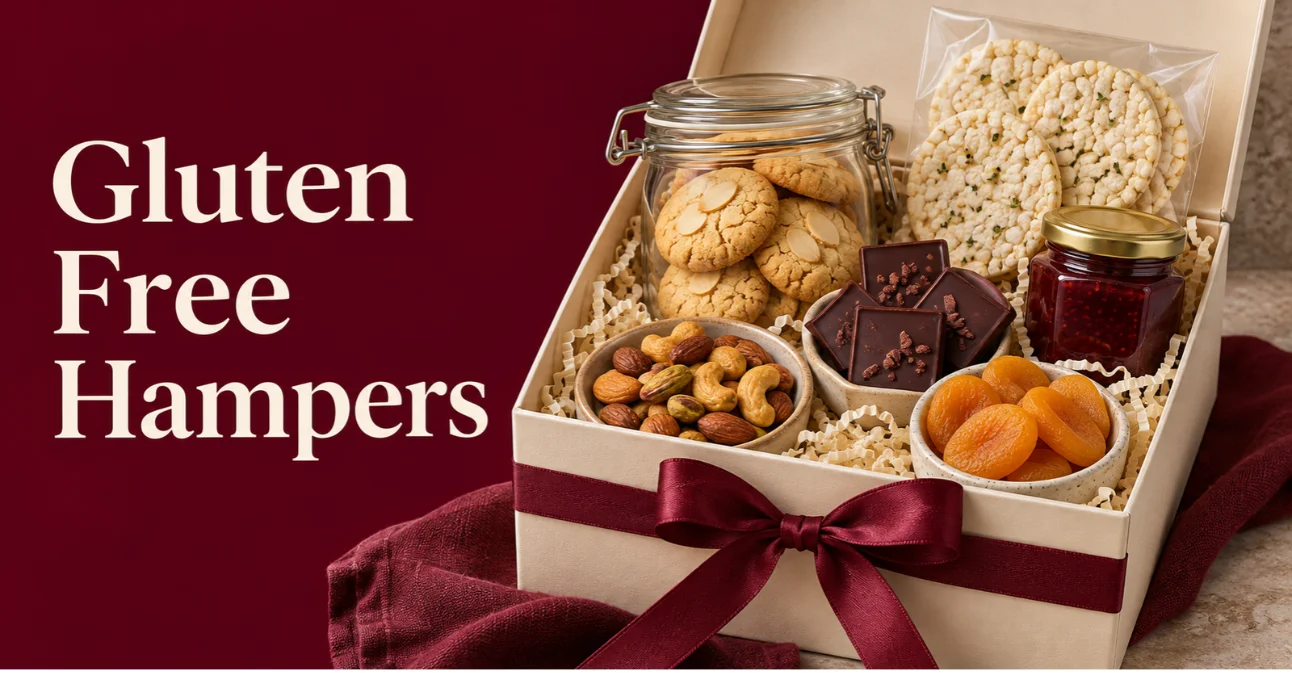
Gluten free hampers can make thoughtful presents for birthdays, Christmas, thank-yous, and other celebrations. For someone with celiac disease, however, attractive packaging is only part of the decision. Every food item needs careful checking for gluten labelling and possible cross-contamination.
Quick answer: Choose products clearly labelled “gluten-free,” then check every ingredient list and precautionary allergen statement. In the UK, foods described as gluten-free must contain no more than 20 parts per million of gluten. For a DIY hamper, keep every product sealed and avoid repacking food beside gluten-containing ingredients.
| What to check | Practical UK guidance |
|---|---|
| Gluten-free claim | Look for food explicitly labeled “gluten-free.” |
| UK threshold | Gluten-free food must contain no more than 20 ppm gluten. |
| Cross-contamination | Read “may contain” and similar precautionary statements. |
| Crossed Grain symbol | A useful recognized certification mark from Coeliac UK |
| Oats | Choose oats or oat products specifically labelled gluten-free. |
| Hamper contents | Mix sweet, savory, and drink options. The recipient likes |
| Typical price | Roughly £25–£50 for smaller gifts and £50–£120+ for larger hampers |
| DIY packing | Keep products sealed and prevent contact with gluten-containing foods. |
Buying Gluten Free Hampers for Someone With Celiac Disease
A hamper for someone with celiac disease should start with the labels, not the presentation. UK gluten-free labeling rules allow the term “gluten-free” only when food contains 20 ppm gluten or less. The Food Standards Agency also defines a gluten-free claim as less than 20 ppm in the final product.
That makes a clear gluten-free statement more useful than vague wording such as “made without gluten ingredients.” Coeliac UK advises checking food labels every time because recipes and manufacturing methods can change. Ingredient information must also identify wheat, rye, barley, and other gluten-containing cereals.
You may also see the Crossed Grain symbol on suitable products. Coeliac UK licenses its Crossed Grain Trademark for qualifying gluten-free foods. It gives shoppers a quick additional way to recognize certified products.
What Does “May Contain” Mean?
A “may contain” statement relates to possible unintended allergen contamination rather than a deliberate ingredient. Coeliac UK explains that these statements are voluntary and should follow an assessment of unavoidable cross-contamination risk. Examples include “may contain wheat” or statements about production lines handling wheat.
This detail deserves attention when you are choosing a gift for someone with celiac disease. Do not assume that an apparently gluten-free ingredients list settles every question. Check the complete packaging, including allergen boxes and precautionary wording.
UK guidance can create an unusual-looking situation where a product says “gluten-free” alongside a warning about wheat. Coeliac UK’s commercial guidance explains that such wording can relate to wheat allergy, while the gluten-free claim still falls under the 20 ppm limit. If the wording is unclear, choosing a less ambiguous alternative can make gift buying simpler.
The Oats Caveat You Should Know
Oats need their own check because ordinary oats can become contaminated with wheat, barley or rye during production. Coeliac UK therefore says oats and oat products not labelled gluten-free should be avoided by people following a gluten-free diet for coeliac disease. Gluten-free oat products must meet the same 20 ppm threshold.
There is another reason to ask the recipient before adding oat-based treats. Coeliac UK notes that a small number of people with coeliac disease may not tolerate avenin, the protein found in oats. You don’t need to decide that for them, so simply ask whether they eat gluten-free oats.
This point matters for flapjacks, granola, porridge, biscuits, and oat drinks. Terms such as “100% oats,” “pure oats,” or “organic oats” do not prove that a product is gluten-free. Look specifically for gluten-free labeling before putting an oat product into the basket.
What to Put in a Gluten-Free Hamper
Variety makes a food hamper feel like a present rather than a weekly shop. Aim for a balance between familiar favorites and one or two more special products. Keep the recipient’s other allergies, preferences, and alcohol choices separate from gluten considerations.
Good packaged options can include these items.
- gluten-free biscuits or shortbread.
- clearly labelled chocolates or confectionery.
- gluten-free crackers.
- popcorn or crisps with suitable labeling.
- nuts or roasted snacks, where appropriate.
- chutney, jam, honey or preserves.
- tea, coffee, or hot chocolate.
- gluten-free cake, brownies, or panettone.
- Suitable cheese or charcuterie for refrigerated hampers.
- Wine, sparkling drinks, or alcohol-free alternatives if wanted.
Naturally gluten-free ingredients still require sensible label checking when they are processed or flavoured. Coeliac UK notes, for example, that naturally gluten-free flours can be contaminated during milling. Packaged products with clear information can therefore be easier for a gift giver to assess.
Christmas Gluten-Free Hamper Ideas
Christmas gives you plenty of scope for a festive mix without relying on standard mince pies or biscuits. Consider gluten-free panettone, chocolate, crackers, nuts, popcorn, and seasonal confectionery. Tea, coffee, hot chocolate, or a favorite drink can round out the box.
A larger family hamper can combine sweet and savory items for sharing over several days. You might add preserves, cheese accompaniments, and individually wrapped treats alongside festive products. Typify’s Christmas ham recipes can inspire a festive main course for the same table, but every packaged ingredient still needs separate gluten-free checking.
Current UK retail examples show how widely prices can vary. Smaller specialist hampers commonly appear around £25–£50, while larger collections can reach roughly £80–£135 or more. Treat those figures only as a rough shopping range because contents, delivery, and seasonal promotions change.
Birthday Hamper Ideas
Birthday gifts can feel more personal when they follow the recipient’s favorite flavors. A chocolate lover might prefer brownies, biscuits, and confectionery, while someone who likes savory food may appreciate crackers, cheese accompaniments, and snacks. A tea or coffee theme also works well when every edible item passes your label checks.
Presentation can reflect the person rather than their dietary requirement. Add their favorite color, a handwritten card, photographs, or a reusable mug. The gluten-free element should make the food suitable without turning the dietary restriction into the theme of the whole present.
Personalization can also make a simple box feel more considered. Printed mugs and other custom items are popular examples. Non-food additions are especially useful when you want more variety without adding further label checks.
Ready-Made Versus DIY Hampers
| Option | Advantages | Things to check |
|---|---|---|
| Ready-made hamper | Convenient, professionally presented | Individual ingredients, allergen information, and substitutions |
| Specialist gluten-free hamper | Easier starting point for dietary needs | Confirm every included product still meets your requirements. |
| DIY hamper | Maximum control over products and budget | More label checking and careful packing are required. |
| Mixed food and non-food gifts | Adds variety without extra food | Keep edible items clearly separated and sealed. |
Ready-made hampers can save time, especially at Christmas. UK examples include specialist hamper companies, department stores, and independent food retailers. Current advertised examples range from about £25 for smaller selections to more than £100 for large premium boxes.
Retailer names are useful as examples rather than recommendations. Product recipes, substitutions, and allergen statements can change between orders. Check the current product page and the labels received before giving the hamper.
How to Make a DIY Gluten-Free Hamper
Building your own hamper gives you control over every item and makes personalization easier. It also lets you spread your budget between food, packaging, and small non-food gifts. Use this simple packing process to reduce avoidable mistakes.
- Choose a clean box, basket, or reusable container. Start with packaging that has not stored loose flour or gluten-containing food.
- Buy only suitable packaged foods. Look for clear gluten-free claims and read the full allergen information.
- Check oat products separately. Include them only when labelled gluten-free and when you know the recipient eats them.
- Leave products sealed. Do not decant biscuits, sweets, or snacks into unlabelled jars for appearance.
- Separate the packing area. Keep bread, flour, and other gluten-containing foods away while assembling the gift.
- Protect fragile products. Use clean paper, tissue, or recyclable filler around jars, bottles, and boxes.
- Keep labels visible. Arrange products so the recipient can easily find ingredients and allergen information.
- Add non-food finishing touches. A card, mug, candle, or small personalized item can make the hamper feel complete.
Leaving food in its original packaging provides another benefit. The recipient retains the ingredients, allergen statement, storage information, and best-before date. That can be more useful than transferring products into decorative containers.
For a homemade theme, be more cautious about food prepared in a kitchen that also handles gluten. Cross-contamination can occur through surfaces, utensils, crumbs, or airborne flour. Packaged, labelled products are often the simpler choice when you cannot confidently control those factors.
A Quick Hamper Checklist Before You Give It
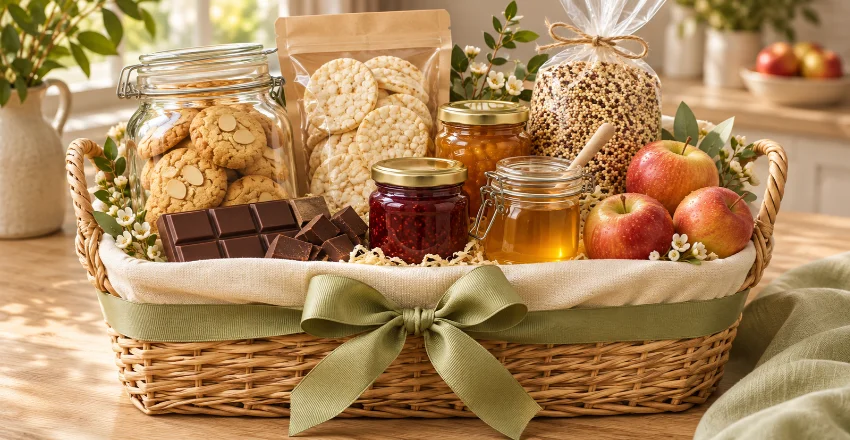
A final five-minute check can catch problems before the hamper is wrapped. Read every label again rather than relying on what you remember from shopping. Coeliac UK specifically recommends checking labels each time because ingredients and production methods can change.
Before closing the box, run through this list.
- every relevant food is clearly suitable.
- any oats are specifically labelled gluten-free.
- precautionary allergen statements have been checked.
- all products remain sealed in their original packaging.
- the recipient’s other allergies or preferences are covered.
- chilled products can remain at the required temperature.
- Expiry or best-before dates are suitable.
- Nothing was packed beside loose gluten-containing food.
You can then focus on presentation without hiding useful information. Place taller items towards the back and protect glass with clean filler. A simple ribbon and personal message usually provide enough finishing detail.
FAQs About Gluten Free Hampers
Are gluten free hampers suitable for someone with coeliac disease?
They can be, provided the individual foods have suitable gluten-free labelling, and you check cross-contamination information. In the UK, a gluten-free claim means the food contains no more than 20 ppm gluten. Do not rely only on a hamper name when individual labels are available.
What is the Crossed Grain symbol?
The Crossed Grain Trademark is a recognised gluten-free certification mark licensed by Coeliac UK. Qualifying products must meet the relevant gluten-free requirements. It can provide a useful visual sign when you are comparing packaged foods.
Can I put oats in a coeliac-friendly hamper?
Choose only oat products specifically labelled gluten-free, and first check whether the recipient eats oats. Standard oats can be contaminated with wheat, barley or rye during growing and processing. Coeliac UK also notes that a small minority of people with coeliac disease do not tolerate avenin.
How much should I spend on a gluten-free hamper?
There is no fixed amount, and a thoughtful small box can work as well as a luxury basket. Current UK examples suggest roughly £25–£50 for smaller gifts and around £50–£120 or more for larger selections. Prices vary by retailer, contents, packaging and delivery, so use those figures only as a rough guide.
Make the Gift Personal, Then Check It Twice
The safest starting point is simple: choose labelled products, read every warning and keep everything in its original packaging. After those checks, you can concentrate on flavours, presentation and the occasion. That approach makes the gift personal without treating the recipient’s dietary requirement as an afterthought.
Whether you buy a finished hamper or build your own, quality matters more than the number of items. Six carefully chosen treats can feel more generous than a large box of unsuitable fillers.